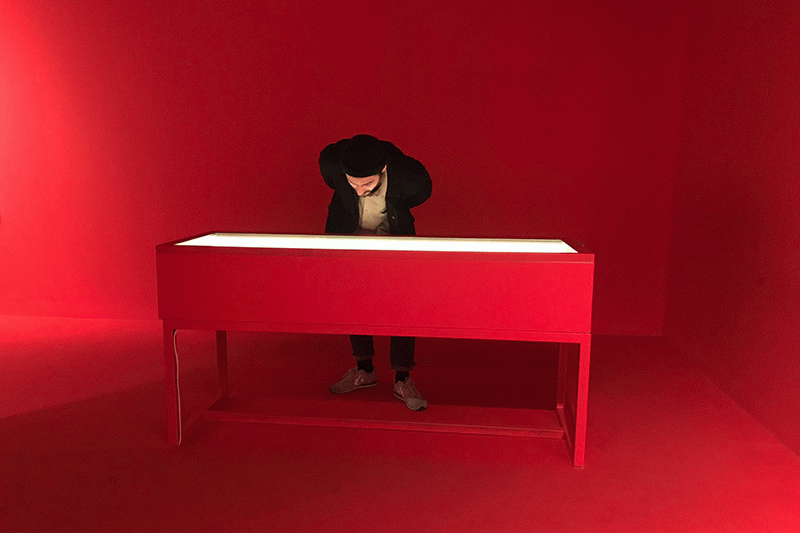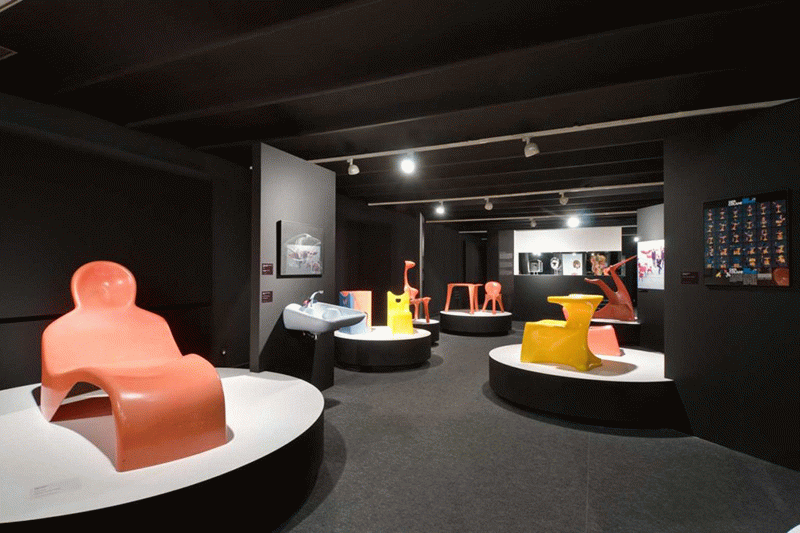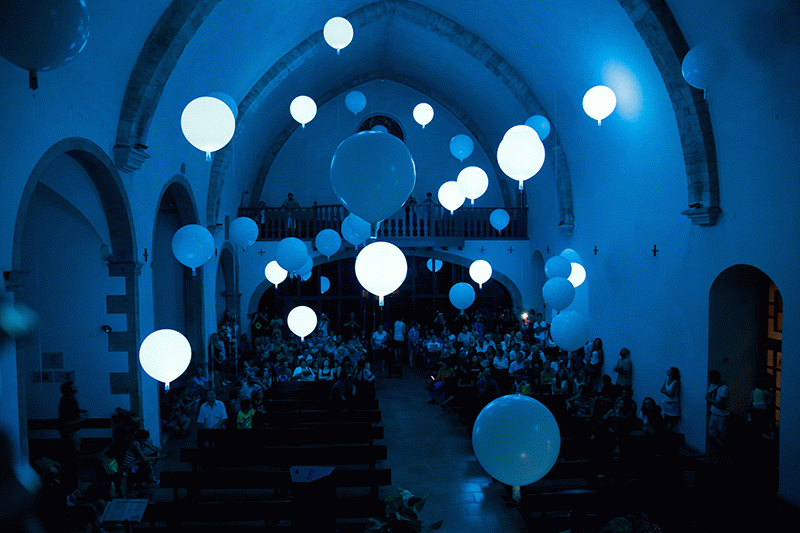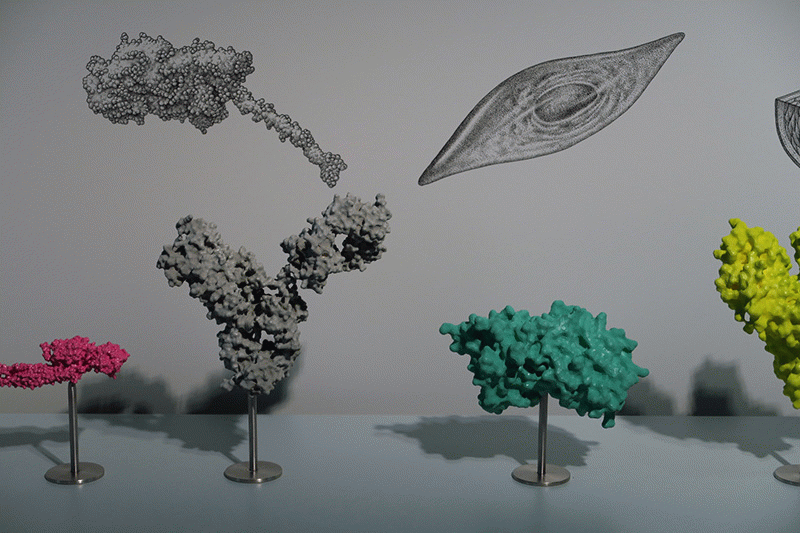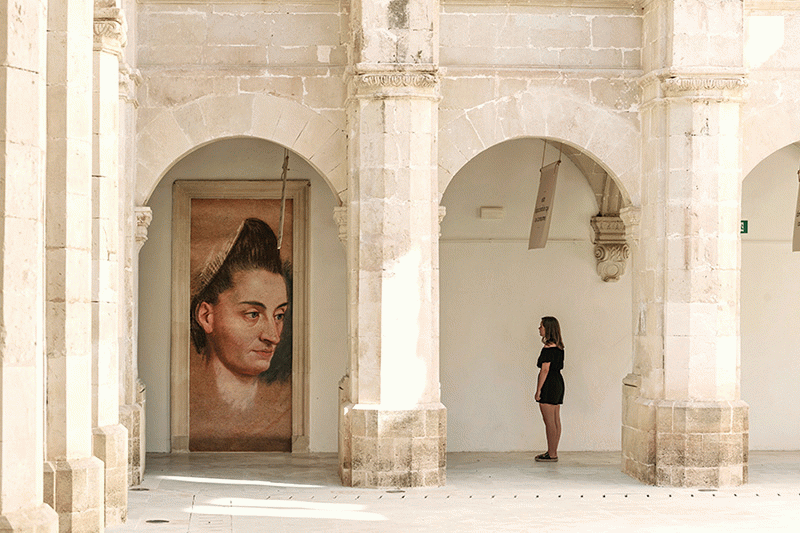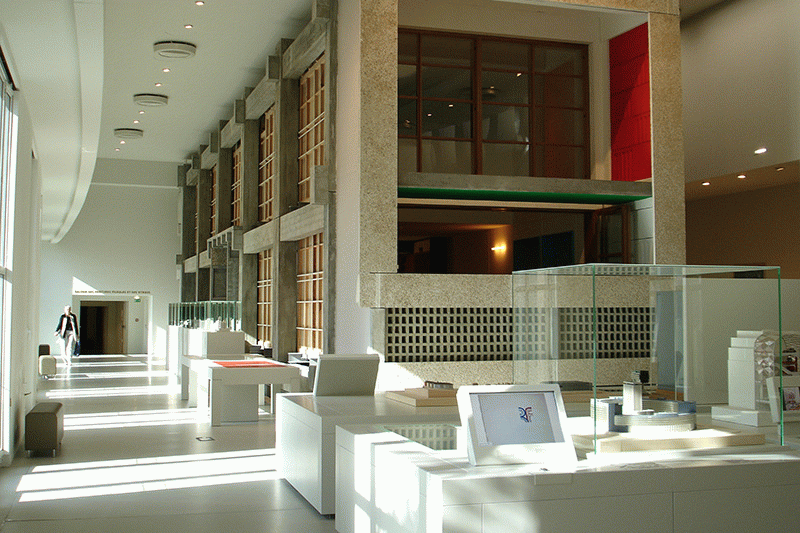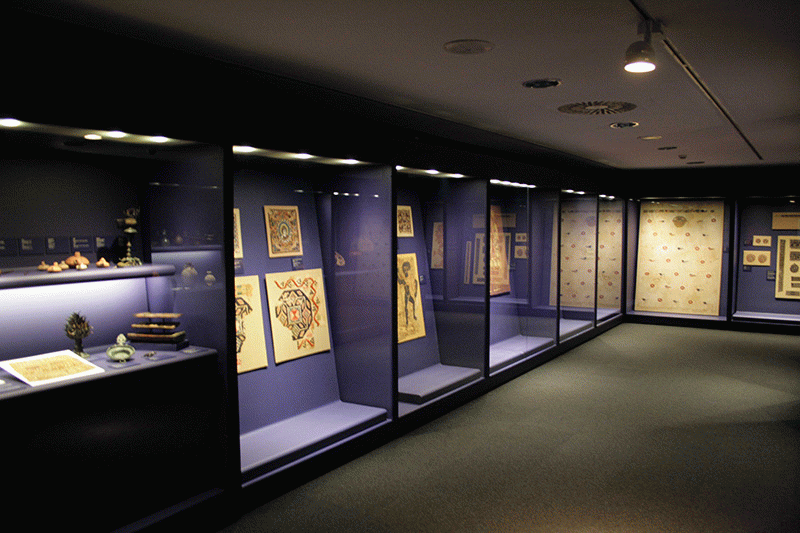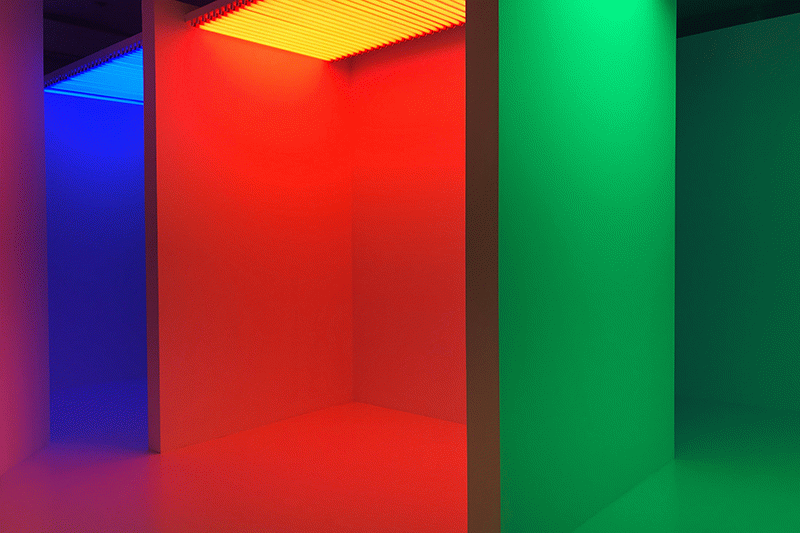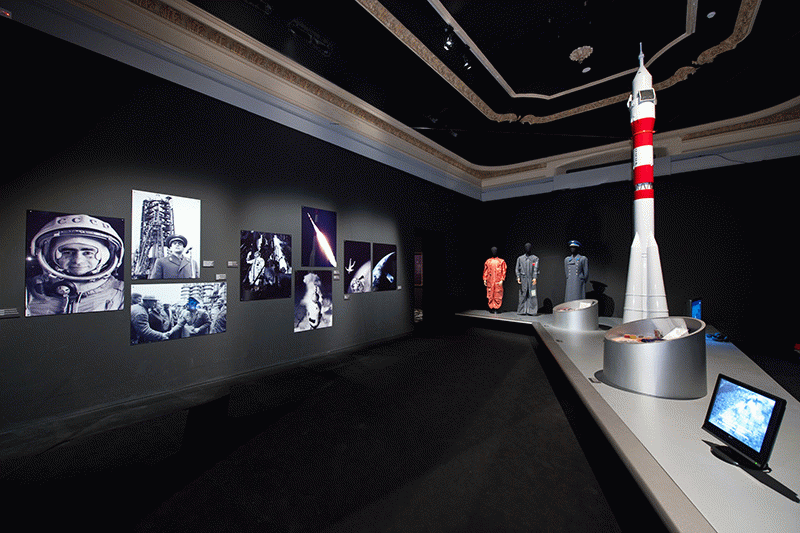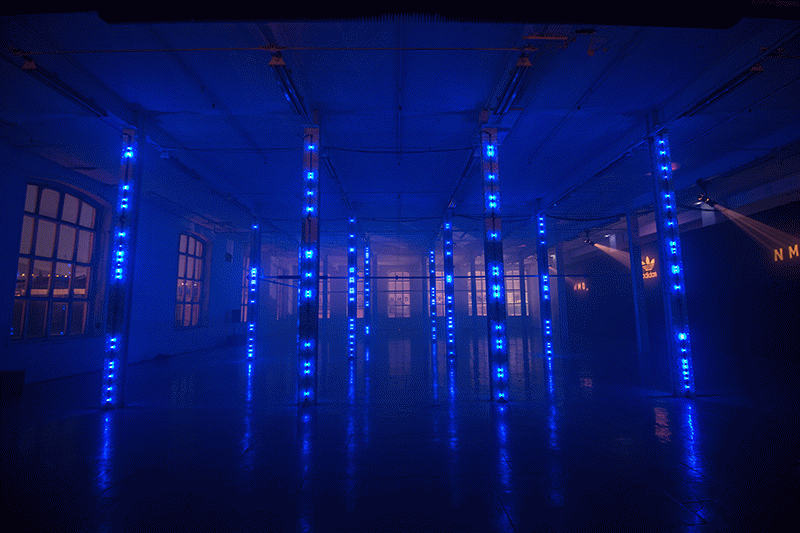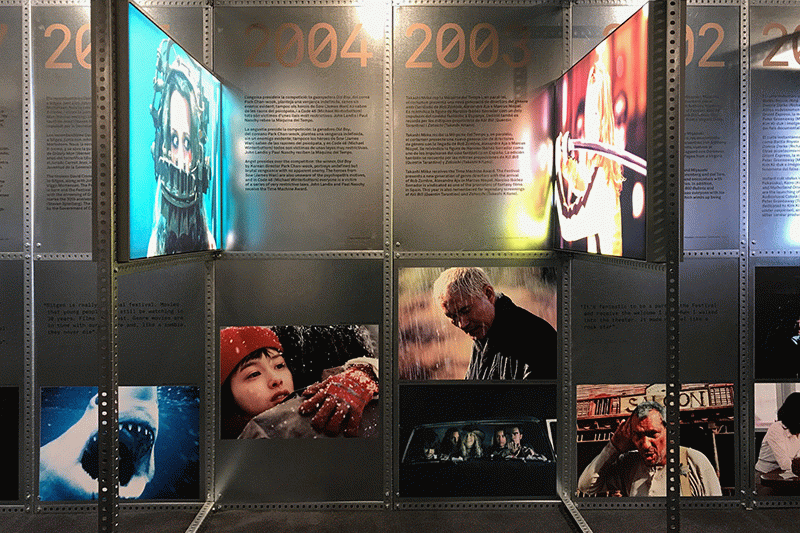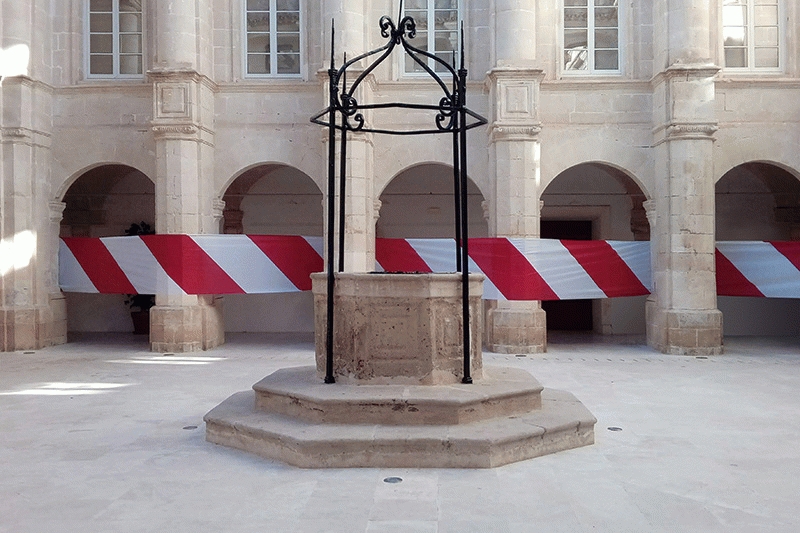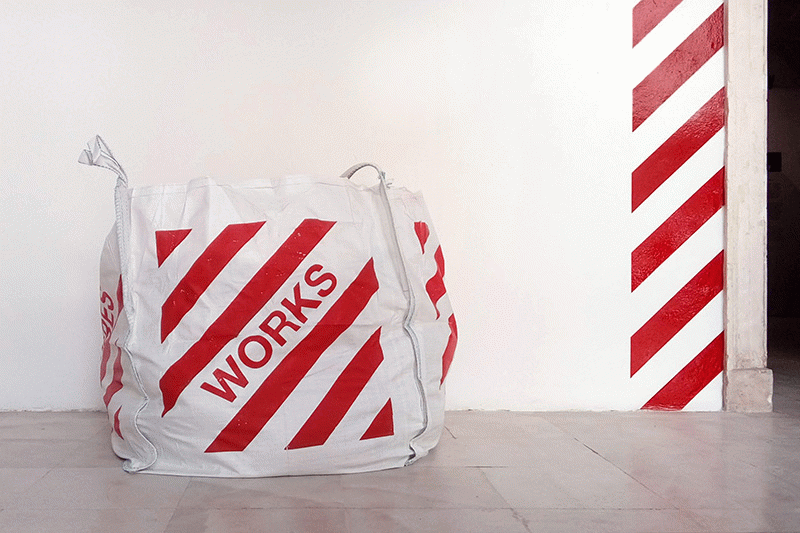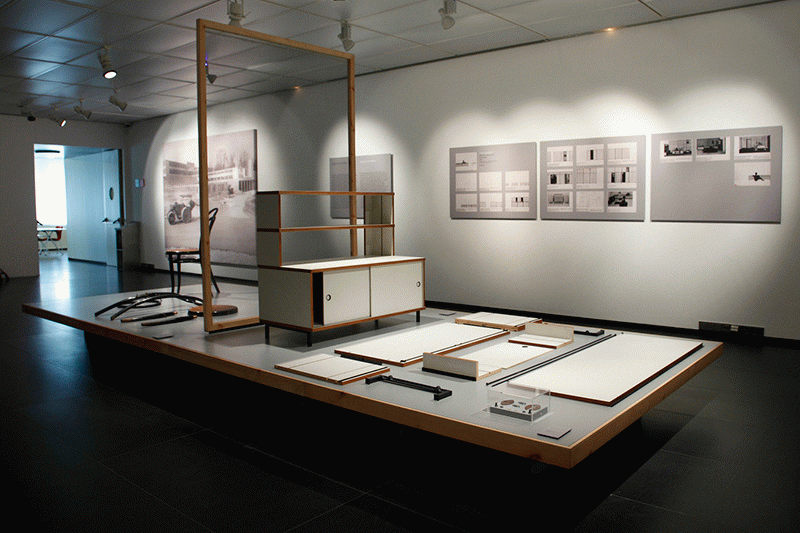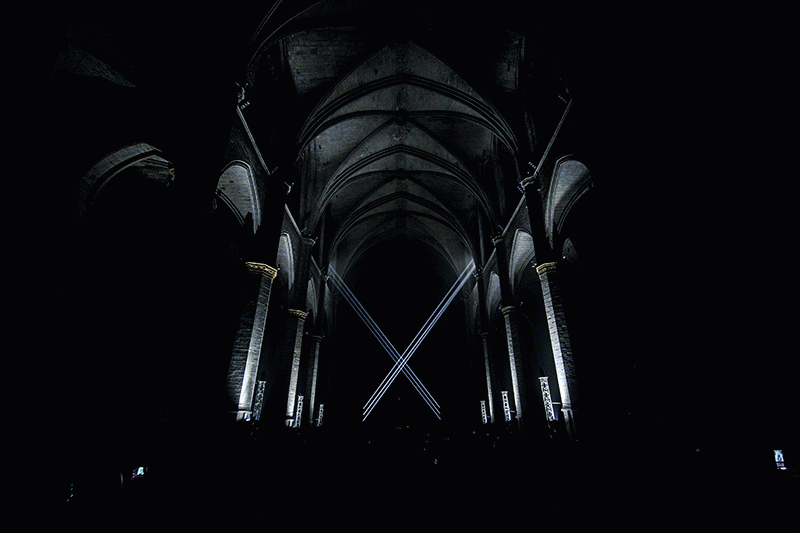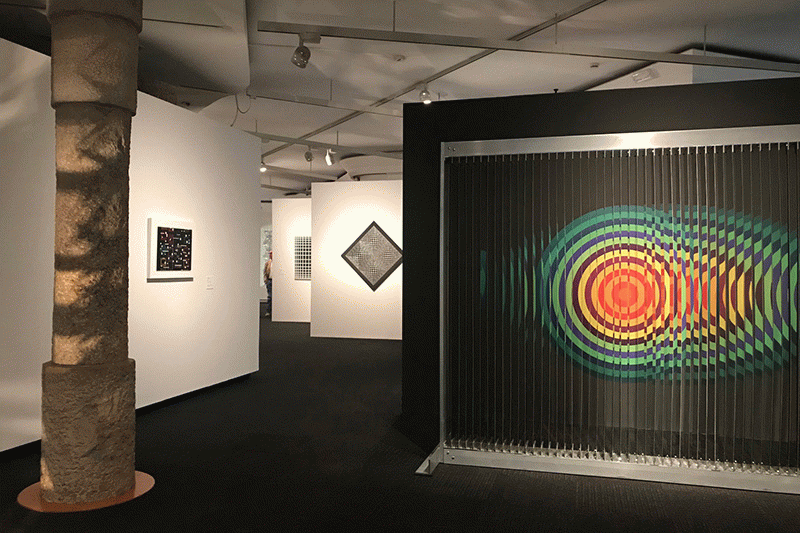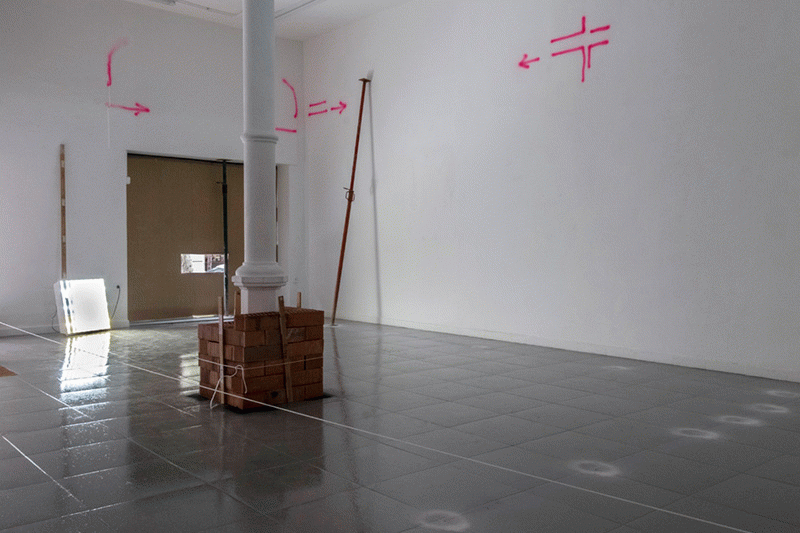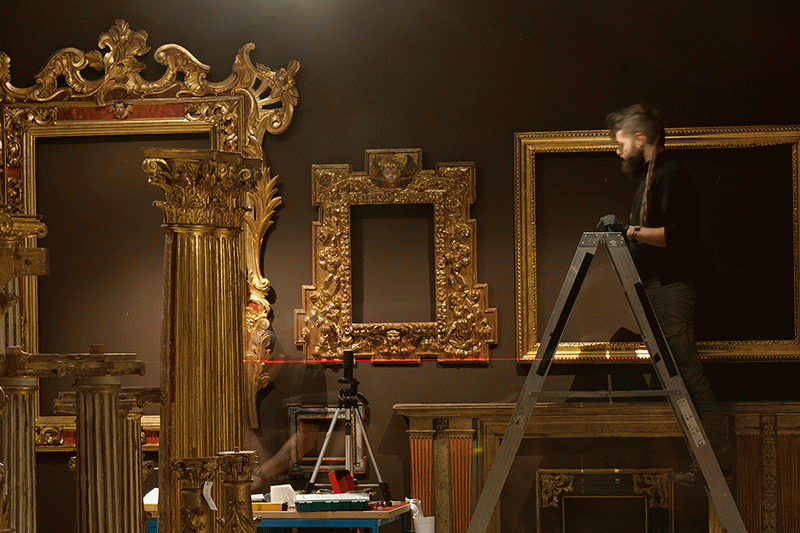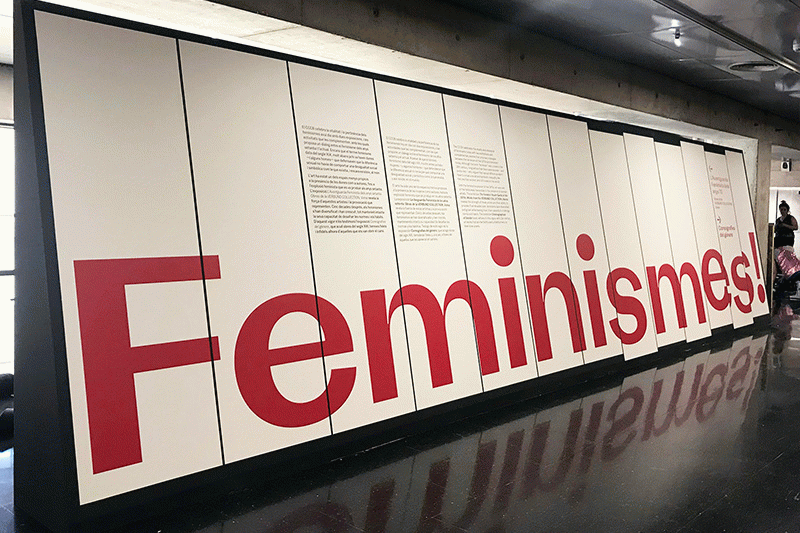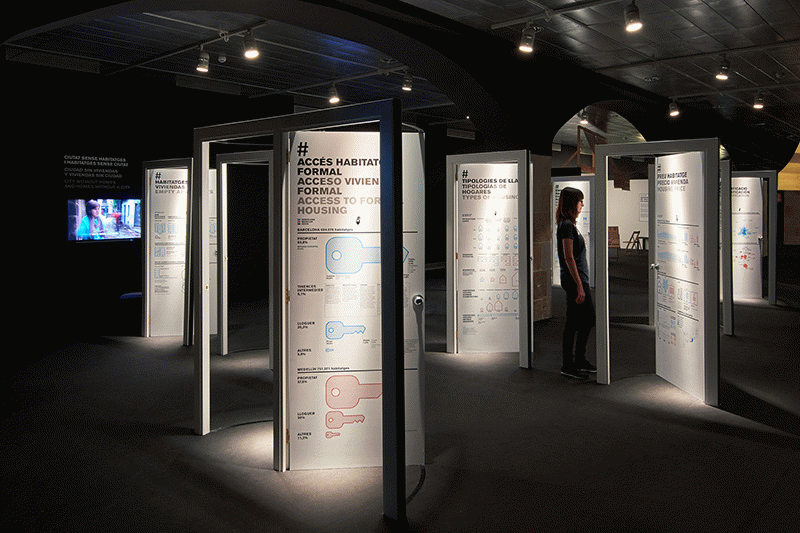


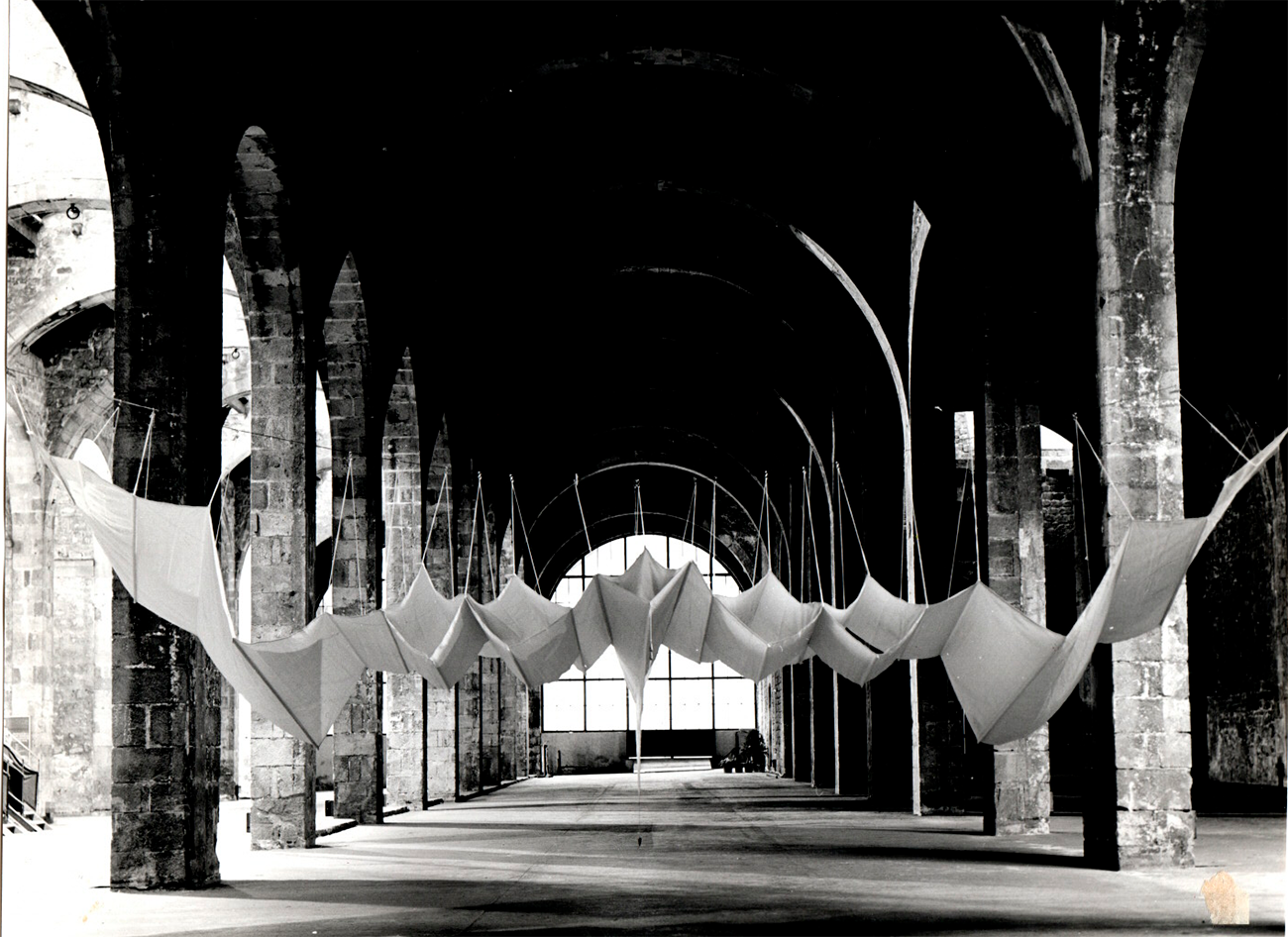

The exhibition is an intervention in the present time. Within its environment, complex networks of work converge, oriented towards the emergence of new cultural meanings and their articulation within the public sphere.
The Master’s in Exhibitions. Art and Design Curating provides the keys to ensuring that this space—based on the intensive collaboration of a wide range of professional profiles (artists, curators, designers, scenographers, mediators, coordinators, and producers)—becomes a fruitful environment for the production of social and cultural value.
Download the information guide ↧
→ Request an interview
→ From 12 February 2027 to 26 February 2028
→ Friday and Saturday, from 4pm to 8pm (online), intensive on-campus course in July Monday to Friday.
→ Blended
→ 60 ECTS
→ 9.420 €
→ Registration open
Exhibitions. Art and Design Curating is a continuing education master's degree that offers students the chance to specialise in the curation, design, and production of new formats and exhibition content. From a contemporary perspective, the temporary exhibition is approached as an event that is complex and multi-dimensional, which involves creative and discursive work, mediation, and an intersection with cultural politics.
The Master’s course is comprised of two specialisation diploma, which can also be studied independently:
- Specialisation diploma in Exhibition Curation and Mediation (30 ECTS)
- Specialisation diploma in Exhibition Design and Production (30 ECTS)
Thinking, creating, and innovating in the field of exhibitions is increasingly a task of managing complexities and fostering transdisciplinary convergence. Exhibition curating is understood as a key practice in the organization of content and the production of discourse, in dialogue with design and art, conceived as creative practices that generate and transform spaces. Artistic curating, together with cultural mediation, drives the creation of relationships and the formation of new audiences. All these elements interrelate to give rise to innovative approaches in the conception and activation of cultural proposals.
From this perspective, the master’s program is conceived as a platform for action that combines research, dialogue, experimentation, and critical thinking. The program allows for practical engagement with new trends in art curating and exhibition design, as well as in temporary spaces, interactive experimentation, and hybrid configurations that transcend the traditional exhibition format. This platform is enriched by the learning generated through the convergence of professionals in curating, art, design, architecture, and other fields of the humanities and sciences, which are fundamental for creating content and new forms of communication.
Partner Institutions
The Master’s in Exhibitions. Art and Design Curating collaborates with various museums, art galleries, and cultural institutions in Barcelona, such as the Disseny Hub Barcelona (DHUB), the Museu Nacional d’Art de Catalunya (MNAC), the Museu d’Art Contemporani de Barcelona (MACBA), the Centre de Cultura Contemporània de Barcelona (CCCB), and the Filmoteca de Catalunya, among others.
Alternation of Online and In-Person Classes
The program is delivered online throughout the academic year through live classes via the Microsoft Teams platform, which can be attended from anywhere in the world.
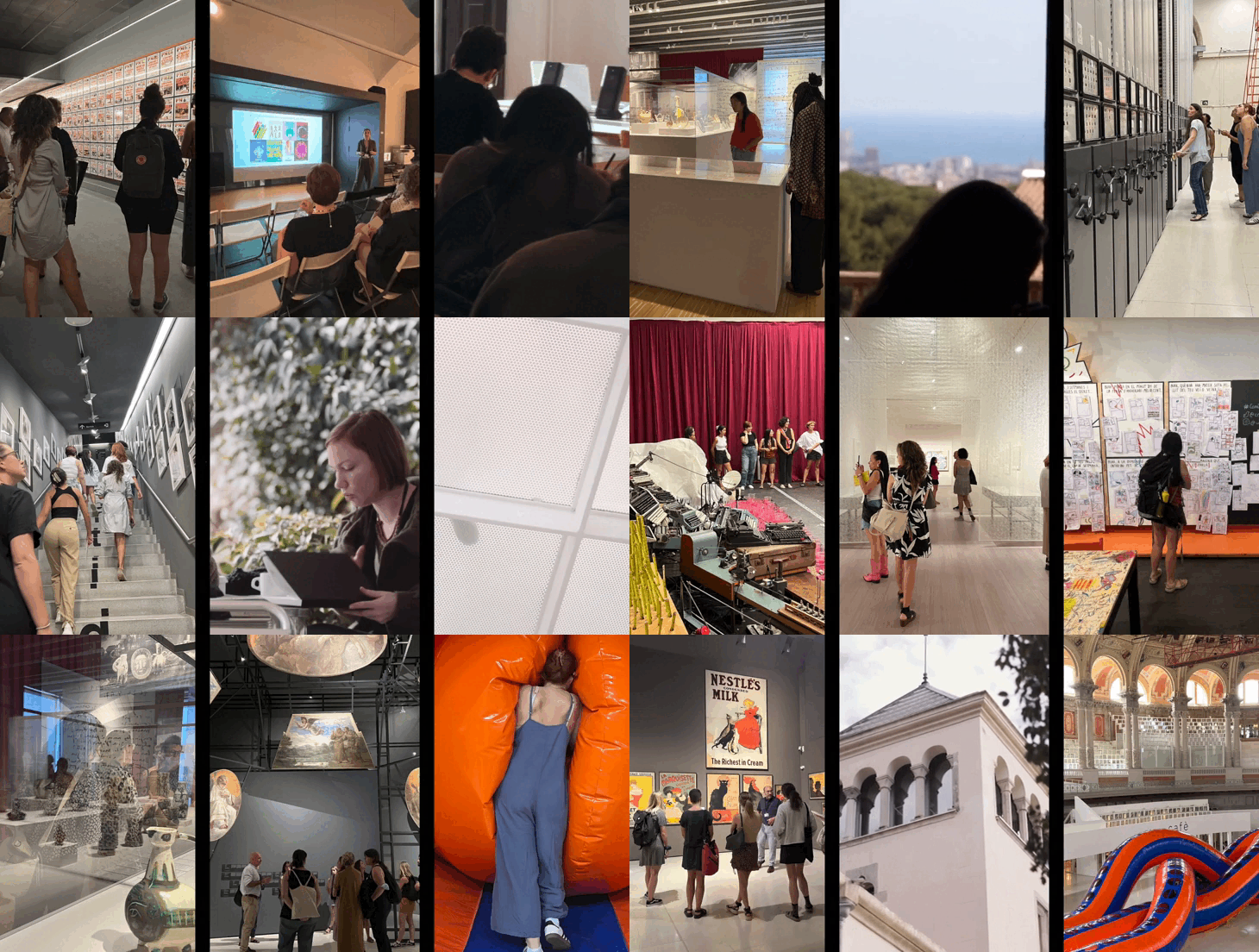
Each July, a portion of the master’s program takes place in person in Barcelona, connected to the Case Studies course, during which visits and activities are organized at various museums and art centers across the city.
The language of instruction for the Master’s in Exhibitions. Art and Design Curating is Spanish.
Who it’s aimed at
The master’s program is aimed at individuals with a university education or professional experience in creative and cultural fields such as design, architecture, art, art history, the humanities, anthropology, sociology, communication, and cultural management. It is especially designed for those who wish to specialize in exhibition curating, artistic curating, and the design of innovative cultural projects.
It is also open to individuals with an interest in expanding their knowledge in the conception of spaces, content creation, and the development of exhibition experiences. This master’s program offers an excellent opportunity for those seeking arts curating courses that combine theory, practice, and critical thinking, within a multidisciplinary environment connected to the latest trends in the cultural and artistic field.
Career Opportunities
- Exhibition curating in museums and other cultural institutions.
- Exhibition design.
- Artistic curating projects in temporary events such as festivals, fairs, seminars, or conferences.
- Organization of public programs in museums, educational activities, and community mediation.
- Consultancy in the development of exhibition spaces.
- Consultancy in heritage musealization projects.
- Mediation in the implementation of educational activities and public programs.
Objectives
- Introduce the main currents of thought in the field of artistic curating practice and their applications across different cultural contexts.
- Provide conceptual and technical tools to develop exhibition projects from a combined perspective of curating, design, communication, and production.
- Offer tools for research, creation, planning, management, design, and execution of the processes before and after the realization of concrete proposals.
- Address the complexity of carrying out projects in real-world contexts.
- Explore innovative experiences in exhibition creation and in the configuration of production and mediation processes that impact spatial arrangements while simultaneously transcending them.
- Connect participants with the contemporary art, design, and architecture circuits related to exhibition practices.
Program
The Master’s in Exhibitions is organized into two specialization diplomas that can be completed over one or two academic years: the Specialization Diploma in Exhibition Curating and Mediation, and the Specialization Diploma in Exhibition Design and Production. These one-year studies run from February to February and combine online learning through digital platforms with an intensive one-month in-person component in Barcelona.
The program is designed as a space for research and learning that integrates theory and practice in real, imaginary, or possible contexts. It is conceived as a journey of creation and experimentation around temporary spaces, exhibition experiences, and content configuration. Through case studies, the master’s program allows participants to gain experience in exhibition curating, develop critical thinking, and apply design tools.
Furthermore, the modular structure ensures continuous updating and an innovative vision. This approach makes the master’s an ideal option for those seeking arts curating courses, with the opportunity to deepen both artistic curating and mediation and design practices related to contemporary art.
Specialisation Diploma in Curation and Exhibition Mediation
Exhibition Curating (9 ECTS). An introduction to the main aspects of curating and exhibition production.
- Trends in curatorial practice and studies
- History and historiography of curating and exhibitions
- Exhibition script
- Narrativity
- The public sphere
- Exhibition formats
- Critical perspectives in curating
- Curating beyond the exhibition
- The exhibition within the artistic institution ecosystem
- The artist-curator
Teaching Staff: Alejandro Alonso Díaz, Olga Fernández López, Oriol Fontdevila, Francisco Godoy, Carles Guerra, Beatriz Herráez, Alexandra Laudo, Àlex Mitrani, Isabel de Naveran, and Laura Vallès Vílchez.
Curating and Mediation (6 ECTS). An introduction to the relational dimension of curating. This course examines curating as a process of articulating networks of collaboration among actors of different kinds. Special attention is given to the public dimension of the exhibition, public policy, work with audiences, and the intersection between curating and art education.
- Mediation beyond cultural mediation
- Curatorial research
- Curating, institutional frameworks, and cultural policy
- Collective and collaborative curating
- The educational turn in curating
- Museum education and public programs
Teaching Staff: Aimar Arriola, Renata Cervetto, Oriol Fontdevila, Yaiza Hernández, Julia Morandeira, Aida Sánchez de Serdio, and Leire Vergara (Bulegoa z/b).
Curatorial Imagination (6 ECTS). This course is based on conversations with curatorial professionals with extensive international experience. The conversation program is updated annually to provide an overview of contemporary trends in curating and mediation, as well as to explore some of the main controversies related to the production of exhibitions and public programs.
The conversations are guided by the following faculty: Manuel Cirauqui and Rosa Lleó.
The program of guest curators changes with each edition of the master’s program according to the lines of work established in the curriculum.
Case Studies in Curating (6 ECTS). This course is conducted in person during July of each master’s edition, using various museums and art centers in the Barcelona metropolitan area as its setting. The course is based on field visits to each institution. Guided by different professionals, students engage with the respective institutional processes, which are explored in depth.
Teaching Staff: Manuel Cirauqui, Oriol Fontdevila, and Rosa Lleó.
Among the institutions visited are the master’s permanent partners: the Disseny Hub Barcelona (DHUB), the Museu Nacional d’Art de Catalunya (MNAC), the Museu d’Art Contemporani de Barcelona (MACBA), the Centre de Cultura Contemporània de Barcelona (CCCB), and the Filmoteca de Catalunya. The program also includes visits to institutions that change annually.
Final Project for the Specialization Diploma in Curating and Exhibition Mediation (3 ECTS). Development of an independent project related to curating and exhibition mediation. The project is supervised by a tutoring team and includes both individual and group work sessions.
Teaching Staff: Anna Alcubierre and Oriol Fontdevila, with the possibility of involving the rest of the postgraduate faculty for individual tutorials.
Specialisation Diploma in Exhibition Design and Production
Exhibition Design (9 ECTS). This course develops specific conceptual, technical, and technological knowledge related to exhibition design in all its dimensions, such as:
- Spatial design
- Design and production
- Museographic resources
- Exhibition and scenography
- Graphic design
- Design and communication
- Publications
- Design for diversity
- Design and curatorship
Teaching Staff: Anna Alcubierre, Javier Nieto, Emiliana (Emili Padrós y Anna Mir), Ignasi Cristià, Roseta Mus, Todojunto (Ricardo Duque y Tiago Pina), Pere Álvaro, Avanti Studio (Alex Dobaño) y Martí Guixé.
Lighting and Digital Formats (6 ECTS). An introduction to audiovisual technologies, experimental animation resources, and exhibition lighting. The course explores the conceptual and technical possibilities that the digital environment opens up in exhibition design.
- Digital formats
- Lighting
- Audiovisual content and techniques
Teaching Staff: ESTAMPA (Daniel Pitarch and Marcel Pie), ILM (Jordi Moya), Burzon Comenge (Ester Comenge and Albert Burzon), and Anna Alcubierre.
Exhibition Production (6 ECTS). This course provides broad knowledge in areas related to the production of temporary exhibitions:
- Coordination and content management
- Work teams
- Production and installation
- Touring exhibitions
- Registration and management of artworks
- Preventive conservation
- Organization of cultural events
Teaching staff: Carlota Broggi, Aida Mestres, Silvia Tena, Lavínia Mayer, Tatiana Tarragó, Begoña Sánchez, and Ruth Bagan.
Case Studies in Exhibition Design (6 ECTS). This is an on-site course held in July of each edition of the master’s program, where various museums and art centers in the Barcelona metropolitan area serve as the setting. The course is based on field visits to each facility, where students engage with the respective institutional processes guided by different professionals.
Teaching staff: Anna Alcubierre and Oriol Fontdevila.
Among the visited facilities are the master’s permanent collaborators: Disseny Hub Barcelona (DHUB), Museu Nacional d’Art de Catalunya (MNAC), Museu d’Art Contemporani de Barcelona (MACBA), Centre de Cultura Contemporània de Barcelona (CCCB), and Filmoteca de Catalunya. The program also includes visits to facilities that change annually.
Final Specialization Diploma Project in Exhibition Design and Production (3 ECTS). Development of an autonomous project related to exhibition design and production. The project includes supervision by a tutoring team and the organization of individual and group work sessions.
Teaching staff: Anna Alcubierre and Oriol Fontdevila, with the possibility of involving the rest of the postgraduate teaching staff for individual tutoring sessions.
Master’s Degree in Lifelong Learning in Exhibitions. Curation and design
Master’s Final Project (6 ECTS). The Master’s Final Project consists of the development of a curatorial project, exhibition design, or mediation project that responds to the student’s motivation and independent work. The goal is to complete a postgraduate final project, which the student undertakes from the second part of the course with supervised guidance from the teaching staff involved in the program. The presentation of this project will be made public once the master’s program is completed.
Obtaining the Master’s degree in Continuing Education in Exhibitions: Curatorship and Design requires completing the courses from the two postgraduate diplomas: the Specialization Diploma in Curatorship and Mediation of Exhibitions and the Specialization Diploma in Exhibition Design and Production. For students enrolled in the master’s program, the Final Project courses of both specialization diplomas are combined into a single course: the Master’s Final Project.
Discounts, fees and payment options
20% discount for:
- Former students who have completed a Graduate, Bachelor's, Master's or Postgraduate programme at Eina
10% discount for:
- Current students of Eina
- Members of the Associació Catalana de Cistellers i Cistelleres
- Members of the Catalan Association of Glass Arts
- Members of the Catalonian Ceramist Association (ACC)
- Members of the Catalan Association of Art Critics (ACCA)
- Members of the Association of Museologists of Catalonia (AMC)
- Members of the Association of Professional Illustrators of Valencia (APIV)
- Members of the Professional Association of Illustrators of Catalonia (APIC)
- Members of the Catalonia Trade, Crafts and Fashion Consortium (CCAM), holders of the artisan card, and participants in the CCAM Young Talent programme
5% discount for:
- UAB Alumni
- Consult the fees for all UAB-specific studies (Masters, Postgraduate and UAB courses
One-time payment option:
- 100% at the time of acceptance (payment must be made within 10 days
of acceptance to guarantee
the reservation of the place)
Fractionated payment option:
- 50% at the time of acceptance (payment must be made within 10 days
of acceptance to guarantee
the reservation of the place) - 50%: before July 31
For further details check on academic info.
- Email: postgraus@eina.cat
- Telephone: +34 93 203 09 23