



The bad student. Critical pedagogy for artificial intelligences Specialized Course
We live immersed in a state of ongoing technological innovation and in the imaginaries that accompany it. But what is truly new in each novelty imposed upon us? This specialized takes the recent development of Artificial Intelligence as a case study, examining it through the lens of visual culture and contemporary artistic practices.
From a critical standpoint, it seeks to investigate what lies behind the functioning of these technologies: how they relate to the ideology of big data, where the drive to automate processes originates, how they connect to the impulse to archive, and which discourses sustain them. The programme aims to challenge the passivity these tools tend to impose and to explore ways of appropriating their possibilities from the margins.
This course is aimed at anyone interested in reflecting on our technological present, with a special focus on Artificial Intelligence and its impact on contemporary culture. It may be of particular interest to visual artists, filmmakers, designers, photographers, students of Art, Photography, and Design, as well as social educators, teachers, and graduates in audiovisual communication, sociology, humanities, anthropology, and political science.
10 theoretical and practical sessions of 3 hours.
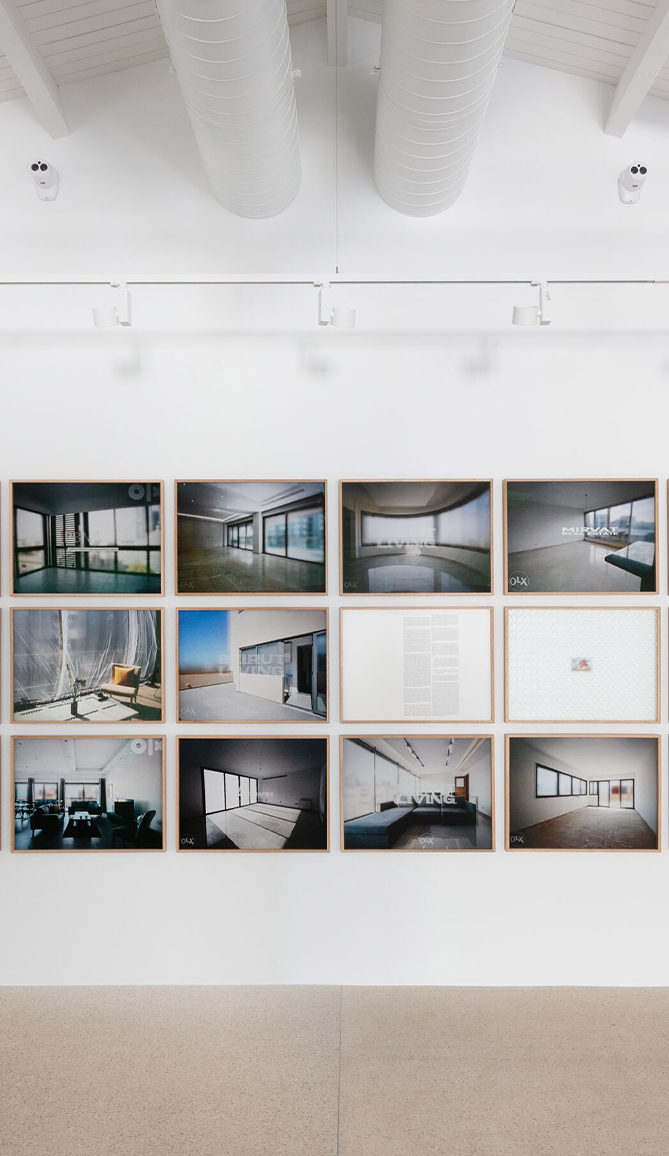
Session 1 — On the exhibition The Art of Navigating. How to Get Lost in a World of Images
Thursday, May 14, from 5:30 p.m. to 8:30 p.m.
Jon Uriarte / Estampa
Session 2 — AI as automation: from the camera to perception
Thursday, May 21, from 5:30 p.m. to 8:30 p.m.
Estampa
Session 3 — Researching the present: lapsus linguae, metaphors, and paratexts of the digital world
Thursday, May 28, from 5:30 p.m. to 8:30 p.m.
Higo Mental / Estampa
Session 4 — A permanent promise: the discourse of technological innovation and its social effects (dazzlement and the difficulty of seeing)
Thursday, June 4, from 5:30 p.m. to 8:30 p.m.
Estampa
Session 5 — Archive, big data, and datasets: drives toward accumulation and order
Thursday, June 11, from 5:30 p.m. to 8:30 p.m.
Estampa
Session 6 — Technology as infrastructure: materiality and labor power
Thursday, June 18, from 5:30 p.m. to 8:30 p.m.
Estampa
Session 7 — Appropriating the tools. Undisciplined technologies
Thursday, June 25, from 5:30 p.m. to 8:30 p.m.
Marc Villanueva & Xesca Salvà / Estampa
Session 8 — Repetitions and resonances: a counter-history of technology
Thursday, July 2, from 5:30 p.m. to 8:30 p.m.
Estampa
Session 9 — Explaining the present: hybrid forms of the video essay in the performative lecture
Thursday, July 9, from 5:30 p.m. to 8:30 p.m.
Alexandra Laudo / Estampa
Session 10 — Generative AI as analysis and parody (resonance models)
Thursday, July 16, from 5:30 p.m. to 8:30 p.m.
Estampa
— Estampa
(Roc Albalat, Pau Artigas, Marc Padró, Marcel Pié and Daniel Pitarch)
An artistic collective of programmers, filmmakers, and researchers based in Barcelona. Their practice is grounded in a critical and archaeological approach to audiovisual and digital technologies, with particular emphasis on archival work and the tradition of experimental audiovisual practices.
— Jon Uriarte
Curator, researcher, and educator trained at the International Center of Photography in New York. His work focuses on the digital transformations of networked images.
— Higo Mental
(Ricardo Pérez-Hita Carrasco and Marta Sesé Fuente)
An artistic collective that produces counter-hegemonic narratives informed by feminist perspectives, using found audiovisual material from the internet to question contemporary visual imaginaries.
— Marc Villanueva
Artist and dramaturg associated with performing arts projects that explore alternative modes of relating to non-human life forms and microsocial processes, developing performative and installation-based works.
— Xesca Salvà
Scenographer, artist, and educator whose practice focuses on corporeality, environments, and the construction of relational scenic experiences.
— Alexandra Laudo
Curator and cultural practitioner whose research explores the intersections between image, critical thought, and contemporary curatorial practices. Her work questions ways of seeing and narrating, fostering debate and critical reflection.
The program costs €780.
Discounts:
— 10% discount for the Eina Community.