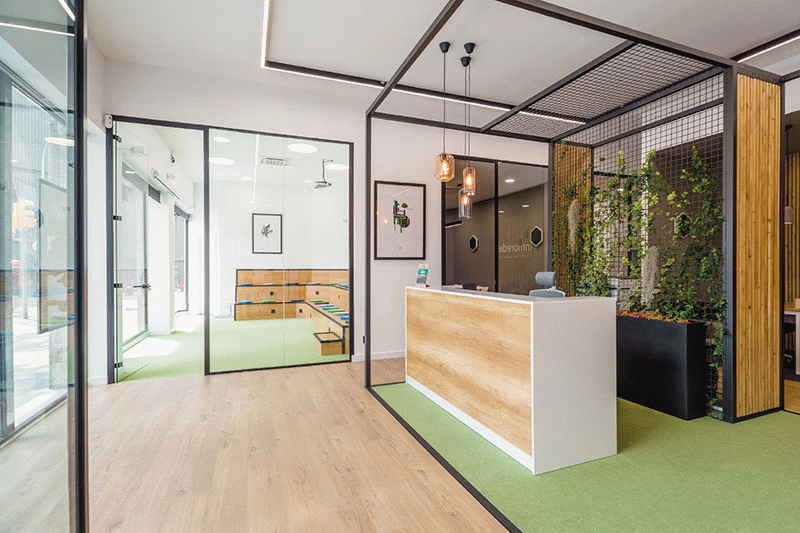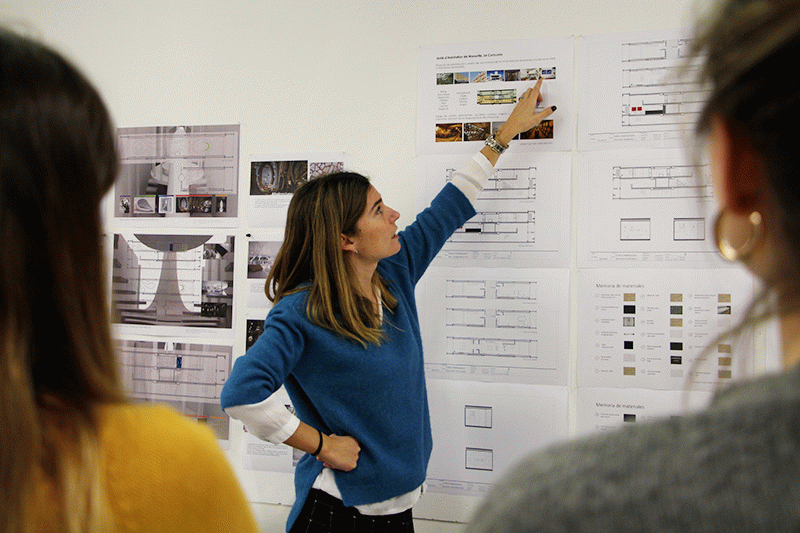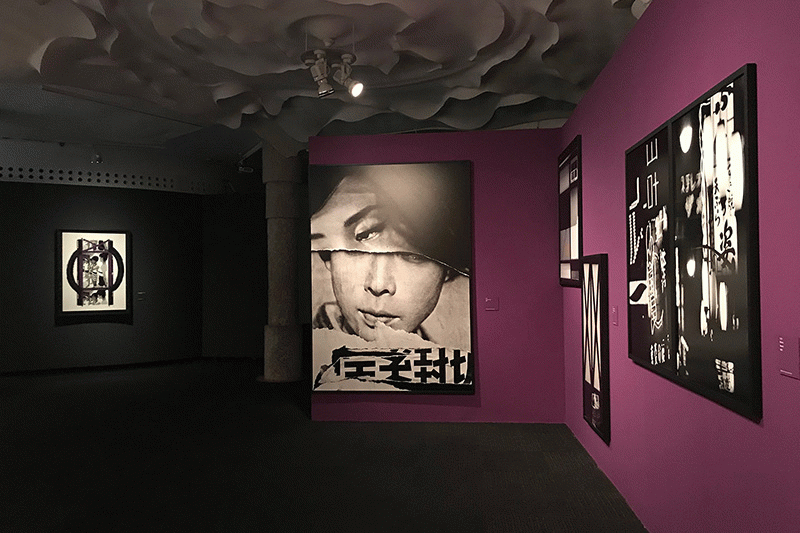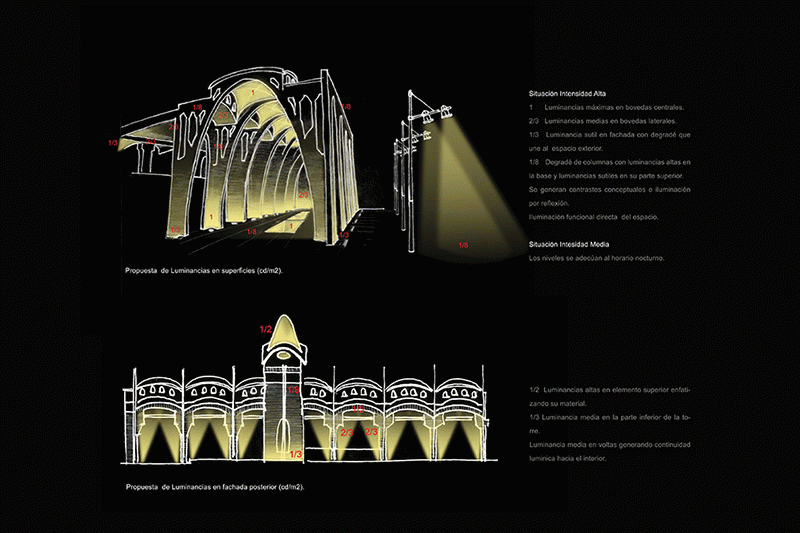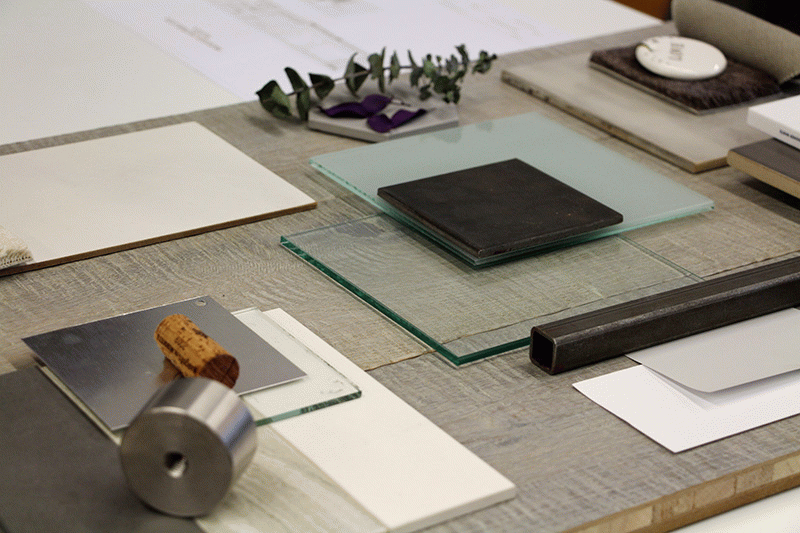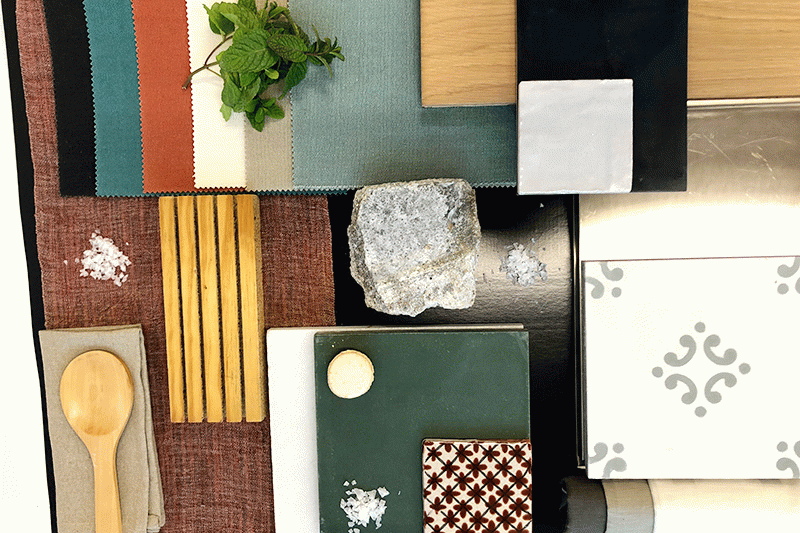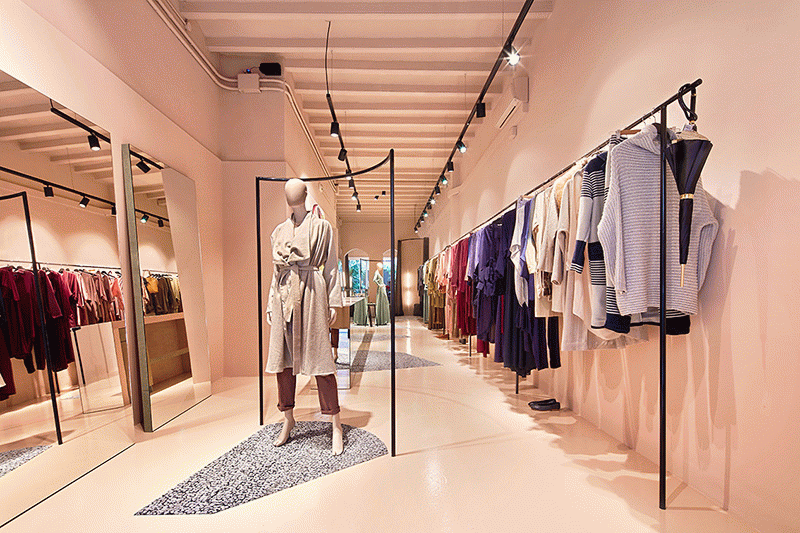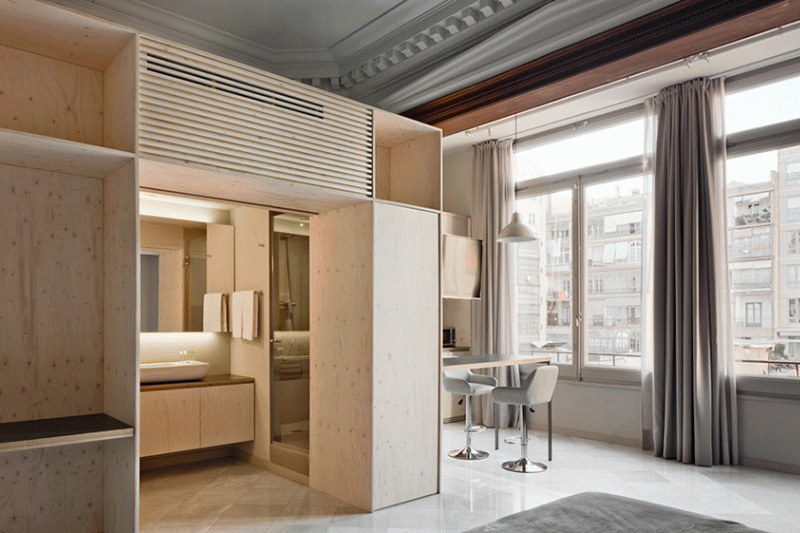







The Master's Degree in Interior Design (MUDE) from the UAB in Eina provides the advanced knowledge necessary for practicing the profession of space design, designing from an emotional, sensitive, and perceptual perspective, with a specific focus on generating experiences.
Download the information guide ↧
→ Request an interview
→ 4 October 2027 to 7 September 2028
→ Monday to Thursday, 4 pm to 8 pm
→ Onsite - 60 ECTS
→ 10.750 € for students from EU countries and foreign nationals with residence. 13.150 € for foreign students who are not nationals of EU member states
The price includes a trip to Milan (flights and accommodation) to attend Milan Design Week.
Presentation of the Master's Degree in Interior Design
This degree delves into the humanities and critical thinking, allowing you to gain a deeper understanding of society and strengthen your design and speculative skills. You can also complete your training and earn a doctorate.
With this master's degree in interior design, you will gain the technical knowledge to develop your professional practice autonomously and independently in all areas of spatial design, and in all phases: from obtaining information and developing a spatial concept to its implementation. You will also be able to interact with stakeholders in the project development process and its execution on-site; write reports and academic texts, publish in specialized journals, or give your own presentations.
What you will learn
Throughout the Master's program, you will develop the skills necessary to approach interior design projects from a critical, creative, and technical perspective. You will learn to conceive, represent, and execute spaces that respond to real-life contexts and diverse needs, integrating disciplines such as visual narrative, spatial planning, ergonomics, and graphic communication.
The teaching staff is made up of prestigious researchers and professionals. With them, you will visit designed spaces, projects in progress, and exhibitions, and participate in workshops at collaborating organizations such as the Museu del Disseny, Mater FAD, and Cosentino City Barcelona.
Why study interior design at Eina?
Studying the Master's in Interior Design at Eina allows you to be part of a creative, critical community committed to transforming the environment through design.
Located in Barcelona, Eina is a center affiliated with the UAB (University of Barcelona) that offers a privileged cultural and professional environment where you can develop real-world projects, collaborate with leading organizations, and access a network of industry contacts.
All of this is supported by an excellent teaching team and facilities designed to enhance your learning.
Master's degree in interior design curriculum
You can download the teaching guides for the subjects in the following section, "Teaching Guides and Report."
First semester
Ephemeral Space Project
In this course, we will learn about the different types of ephemeral spaces: cultural, exhibition, performing arts, and temporary, using resources that include the application of new technologies. We will review our understanding of corporate image and the use of communication tools to convey the project, as well as the importance of lighting in exhibition spaces.
Domestic Space Project
We will develop a final project for a domestic space in a specific context, with a specific program and users.
Visual Communication of Space
In this course, you will learn advanced graphic and visual communication techniques and tools that can be used in spatial design to communicate a space's identity.
Project Narrative
We will analyze specific concepts for interpreting the design processes involved in the development of a spatial design project, as well as key aspects of the master's degree: analysis of the scope and sector of activity, study of pre-existing buildings and locations, and the configuration of user needs and their relationship with activity programs.
Space Conditioning
We will learn how to restore and rehabilitate, as well as how to implement thermal and acoustic conditioning with energy savings and efficiency in mind. We will learn the fundamentals of light and its impact on space. We will also learn techniques and methods for calculation and graphical representation.
Second semester
Commercial Space Design
Project workshop focused on project configuration for the development of the corporate image and design of a commercial space for restaurants, hospitality, or retail, applied to the pre-existing space and the proposed use.
Workspace Design
Creation of a project proposal for a space for work, health, and/or well-being, based on the existing social context and the requirements of the program and users.
Space Design of the World
We will review the models and influences in the history of space design, as well as a critical analysis of the typologies followed in space design projects, the history and development of trends, and the historical evolution of representation.
Project Management
We will learn the necessary project documentation, the methodology for managing responsibilities with government agencies and compliance with technical regulations: acoustics, occupational health and safety; as well as financial planning and budgeting tools. The project will include the preparation of all the necessary procedures for the construction and management of a space.
Master's Thesis
This consists of a research project with an original approach, supervised by one of the program's professors. It must consist of a design project and/or a dissertation, and may be either speculative or formal in nature, but should, in all cases, be considered a contribution to the knowledge of its subject.
Master's Objectives
The Master's Degree in Interior Design aims to train graduates in Design (specializing in Interiors), Architecture, or Technical Architecture, as well as related degrees such as Interior Architectural Design, Fundamentals of Architecture, Landscape Architecture, Performing Arts, Humanities and Cultural Studies, Construction, Civil Engineering, Industrial Design Engineering, and Product Development, through specialized theoretical and technical competencies, skills, and advanced knowledge in the field of spatial design.
The development of critical thinking and positioning will be transmitted transversally as a basis for understanding and generating knowledge.
Students will reflect on, evaluate, and interpret the social, cultural, and historical context in which spatial design operates, in addition to assimilating its emerging values.
At the same time, the master's degree will provide students with a solid understanding of the development of spatial design projects, both executive and speculative, enabling them to differentiate the specificities of their various areas of activity, developing the optimal proposal and solution. The most appropriate design strategies will be developed according to the specific characteristics of each case, and organizational methodologies will be implemented to achieve their full success.
Students will analyze and evaluate the specific instruments necessary for the design of physical space, as well as the essential tools for its correct and adequate representation.
Who is it for?
The degree is aimed at students who wish to acquire advanced, technical knowledge of spatial design by reflecting their project in relation to its social context, using the humanities and critical thinking.
Therefore, the course is also aimed at students seeking to embark on a research career, write scientific reports and academic texts, publish in specialized journals, and give presentations at conferences. They may also complete their training with a Doctoral program.
The master's degree focuses on developing independent and autonomous professional practice in the design of commercial spaces, housing, workspaces, exhibitions, museums, scenography, and ephemeral and/or temporary spaces.
Access and selection criteria
To enter the master's program, you must have a bachelor's or graduate degree in Design (specializing in Interior Design), Architecture, Technical Architecture, Interior Architectural Design, or Fundamentals of Architecture.
Also eligible are those with certain engineering degrees (see list below) who can demonstrate at least one year of work experience in spatial design, architecture, and/or related fields, related to project development or construction management. In these cases, students may also be required to take additional training courses based on their profile and experience.
The degrees eligible for applicants with proven experience are:
Engineering:
- Building
- Civil Engineering
- Industrial Design Engineering and Product Development
Selection
If the number of applicants exceeds the number of places offered, placements will be based on the following priority criteria:
- Academic record (10%)
- Curriculum vitae (30%)
- Motivation letter (20%)
- Portfolio (30%)
- Language proficiency (10%)
Career Opportunities
The Master's Degree in Interior Design in Barcelona prepares you for a solid and versatile career in the field of spatial design. Throughout the master's degree, you'll acquire the skills necessary to work independently in a variety of settings, from the design of commercial and domestic spaces to temporary, museum, and stage spaces. You'll also be equipped to work on international projects, lead teams, and collaborate with studios, companies, and institutions in the creative and architectural sectors.
Below are some of the main career opportunities offered by the master's degree:
- Design and implementation of retail, catering, and leisure spaces.
- Design and implementation of work, educational, and wellness spaces.
- Design and implementation of residential and domestic spaces.
- Curatorship and design of exhibition and knowledge spaces.
- Scenery design, location, and space creation for theater, film, and audiovisual media.
- Ephemeral architecture for fairs and conferences.
- Lighting design.
- Management and curation of performative and experiential art installations.
- Photography and graphics applied to space.
- Consulting on sustainability and biophilic design in the creation of spaces.
Consulting on accessibility, ergonomics, and inclusive design in the creation of spaces.
Teaching Staff
The master's program boasts a highly qualified teaching team comprised of practicing professionals and researchers specializing in different areas of interior design. Their experience and support guarantee rigorous, up-to-date training that is connected to the industry's professional landscape.
- Anna Alcubierre (Museography and Scenography)
- Sara Coscarelli (Critical History of Design)
- Albert Crispi (Architecture and Renovation)
- Giacomo Damato (Interior Design and Lighting)
- Toni Gironès (Architecture and Project)
- Laia Gómez (Interior Design and Technical Architecture)
- Salvador Huertas (UX/UI Design and Visual Communication)
- Tomás López, Silvia Santaeugènia, Artur Muñoz, Raúl Oliva, among others.
Payment options
Place reservation
4.000€: 10 days after acceptance (this advance is offset against the final tuition fee).
Enrolment
Remaining part of the enrolment fee, once the enrolment has been formalised.
Discounts
- 20% discount for former students who have completed a Graduate, Bachelor's, Master's or Postgraduate programme at Eina.
- 10% discount for Eina students.
- Download the teaching guides of the subjects
- Download MURAD report (in Spanish).
- More info in the Quality section of this website.
Historic teaching guides:
- En un ai: habitar: aparèixer i desaparèixer en les ciutats - Eva Beser Martínez
- Un tast de mar, intervenció en una musclera: punt de trobada gastronòmic i de contemplació - Silvia Ibáñez Navarro
- Vivienda Migratoria culturalmente apropiada. Aplicado a la comunidad Shipibo - Konibo de Cantagallo, Lima - Perú – Elke Kovacevic del Castillo
- El Ser y Los Espacios Que Habita - Yolanda Loranca Ramos
- Azul metafórico en la construcción y deconstrucción de un espacio - Ana María Poveda Pérez
- Micro ágoras - Sofía María Tagle Perkins
- Una guía práctica de diseño para el hogar - Esteban Francisco Ugalde Ledesma
- Más allá del Aroma, Creando Experiencias para las nuevas Cafeterías de Barcelona - Grecia Lilia Villegas Molina
- Email: postgraus@eina.cat
- Telephone: +34 93 203 09 23
- Instagram: @master_de_espacios_mude