

Former EINA student Estefanía Aragüés is a graphic designer and partner of Run, a graphic design studio based in Barcelona that specializes in corporate identity, graphics applied to spatial design, editorial design, web design and packaging. Her work has received several Laus, Red Dot and Art Director’s Club of Europe awards.
You started at Run in 2007 as a graphic designer and now you’re a partner. How did that evolution come about and how has it influenced your work?
It sounds like a cliché, but Run is a very family-style business. When you feel good somewhere and are comfortable in what you do, everything else flows. It’s a small studio, and it helps to be present in all the phases of a project, from day one, without hierarchies preventing you from moving forward. Run has influenced all my work. I grew up as a designer here and I continue to learn here.
In many of your projects at Run, the visual component is also tactile. Could you tell us about this process? Do customers come expecting this tangible finish or is it something that arises spontaneously from the customer’s needs?
I don’t think it’s been a deliberate process, but it has been built up with each project. We ourselves have come to realize its importance gradually, to the point that we now don’t conceive a project without first considering what materials define it. We consider it another aspect of communication, like typography, colour or any other design component.
I’m not sure that clients come looking for this particular feature deliberately, at least not consciously. But it’s true that they choose us based on other work we’ve done where that materiality is present. So the answer is both yes and no. ;-)
How does this feature coexist when part of the order is digital?
We actually try not to replicate the same formulas in all applications. Although they are part of the same identity, a business card, a restaurant menu or a website are very different communication media and treating them differently makes the project much richer. I don’t mean that the material part of a project can’t be transferred to the digital sphere – in fact, it’s very interesting when it is – but not everything has to be present in all applications.
From your experience during these years working for different clients and different disciplines within graphic design, what are you most passionate about?
There isn’t one single thing, and I could give many different answers at different times. At certain times we do more brand identities or publishing or digital projects, etc. The fact that we don’t specialize in a single discipline makes the work a lot more varied and fun.
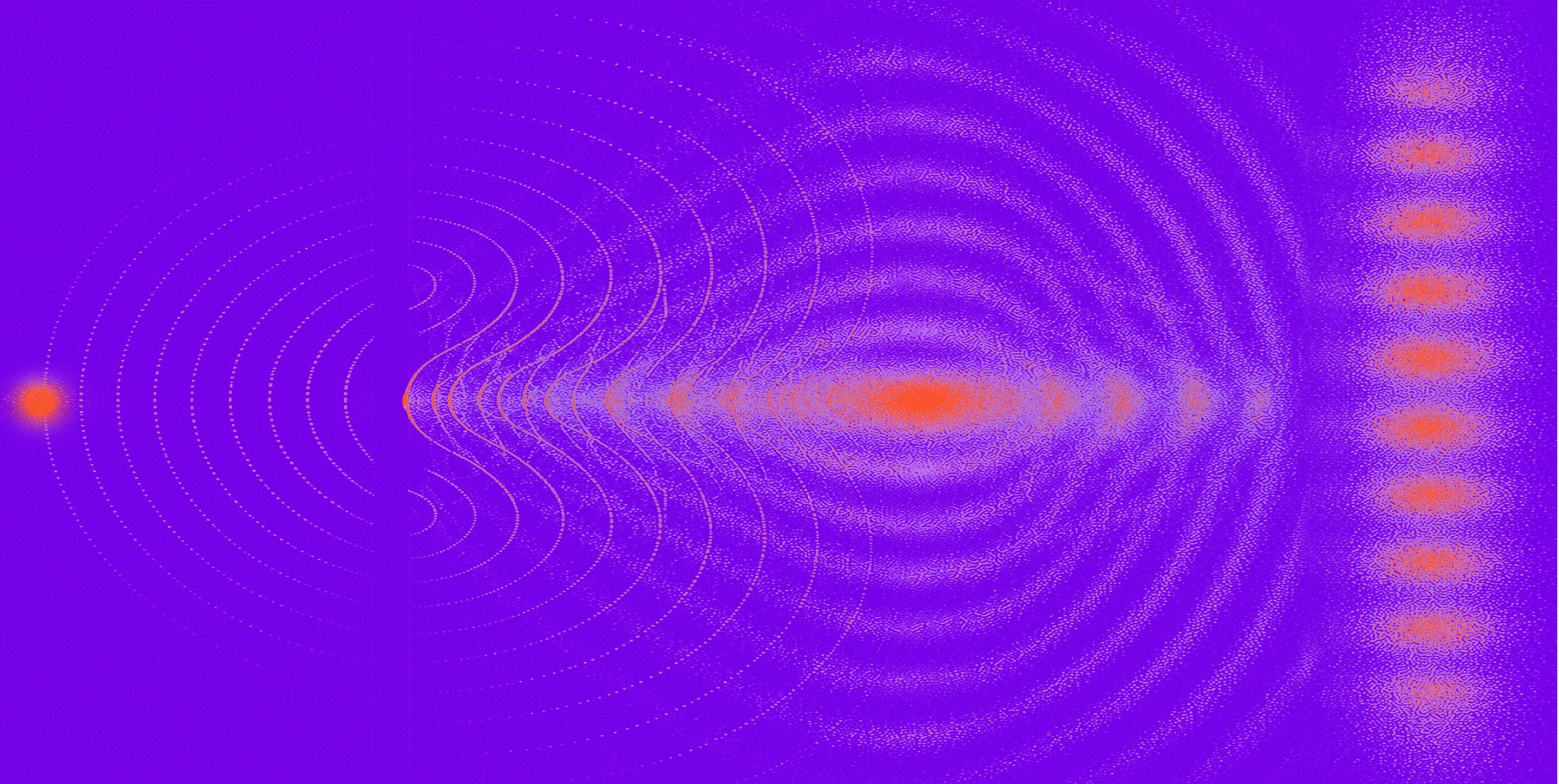
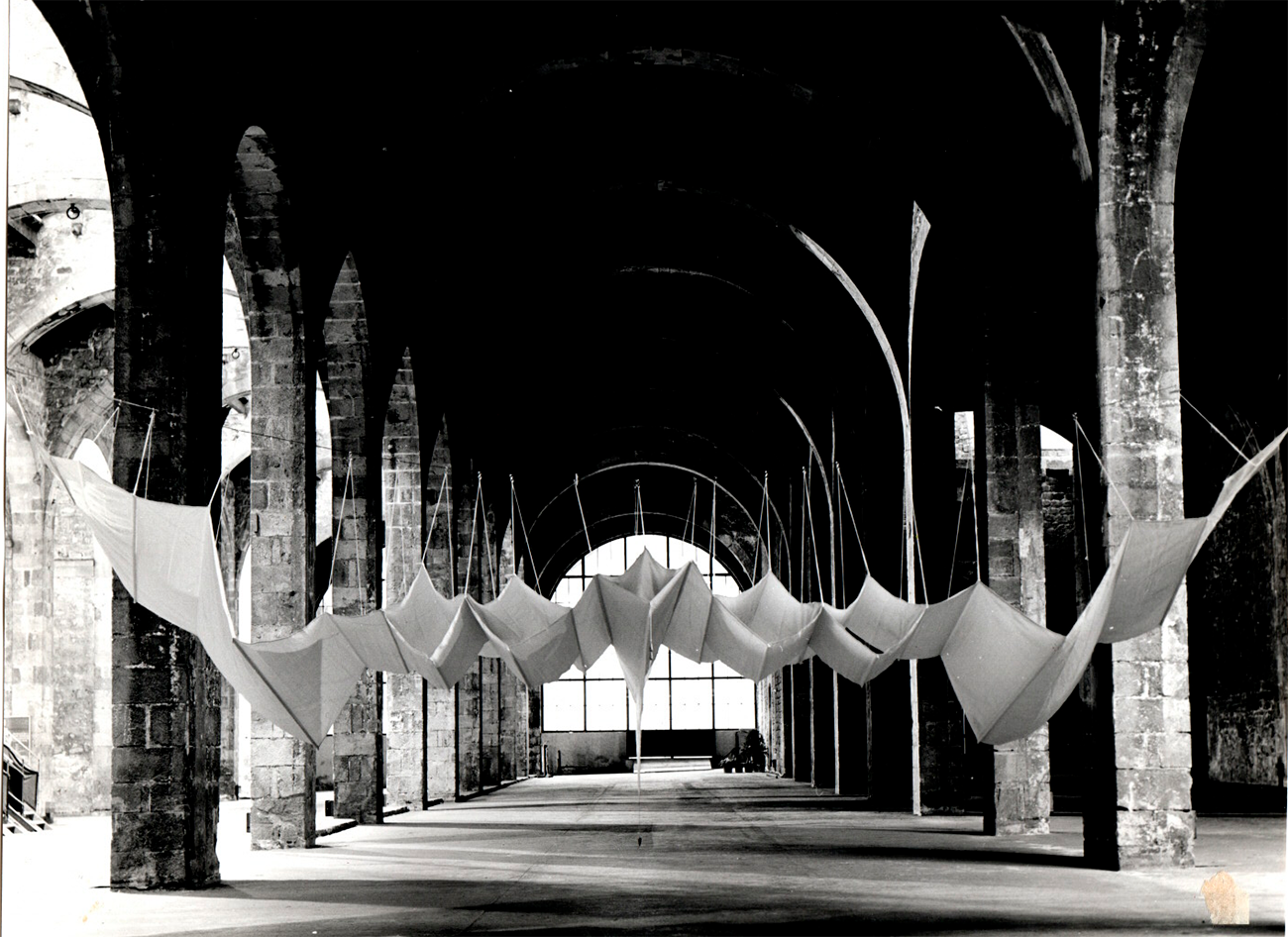
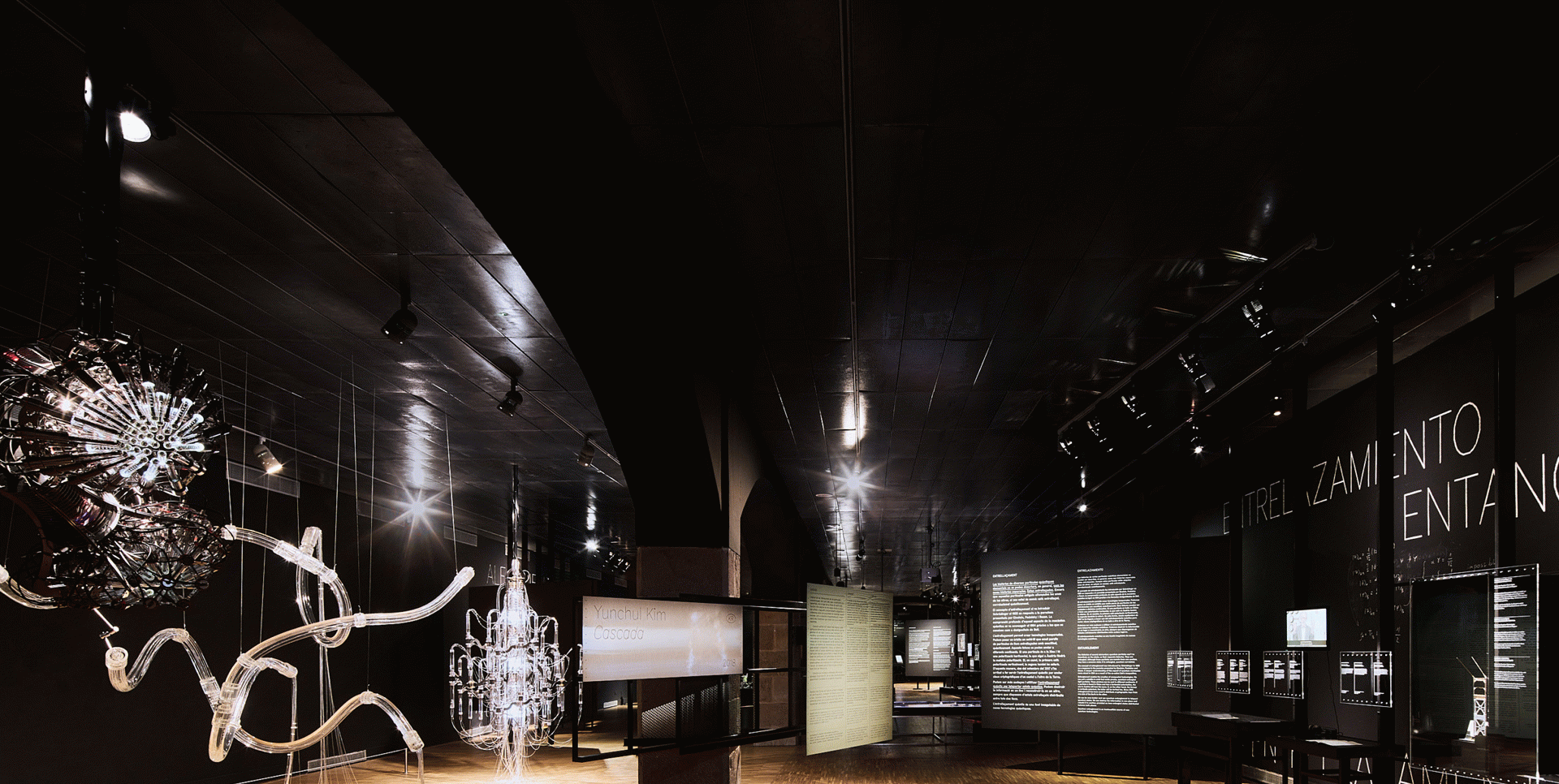
A couple of years back, I really enjoyed doing the design for the CCCB’s Quantum exhibition. There, the material aspect we talked about before was even more important, while being able to collaborate with other teams, such as the architects Queralt Smooth, make the process much more enriching.
Your work seems to be carried out at your own pace, unrelated to the speed that currently prevails. How do you manage to give the necessary time to each proposal?
Is that the impression we give? Hehehe.
I guess from the inside it’s hard to see it that way. I often feel that time is running out and I think the key to giving the necessary time to each project, in our case, is teamwork. That might mean releasing some people from their regular work so that they can concentrate on a project exclusively, or might take the form of stopping everything and coming together to build the project as a team.
How can design help in the current situation? How can a design studio influence the world and society?
Our job is communication and creating a visual presence of projects and ideas for the general public. Starting from this premise, our influence and responsibility are obvious. It’s a challenge (but a nice one!) to think and work within that awareness.
What does your workspace need? What materials, textures, or objects surround you when you work?
The basics would be: a notebook, an internet connection, a graphics tablet, a scanner, water, natural light and music.
In addition, the studio is full of different materials, a kind of mini Service Station ;-). We have a room-workshop with tools, sprays, etc., what we ourselves don’t have we can usually find in Martillo, the workshop with a laser cutter just downstairs, where we usually make our models.
 Estefanía Aragüés
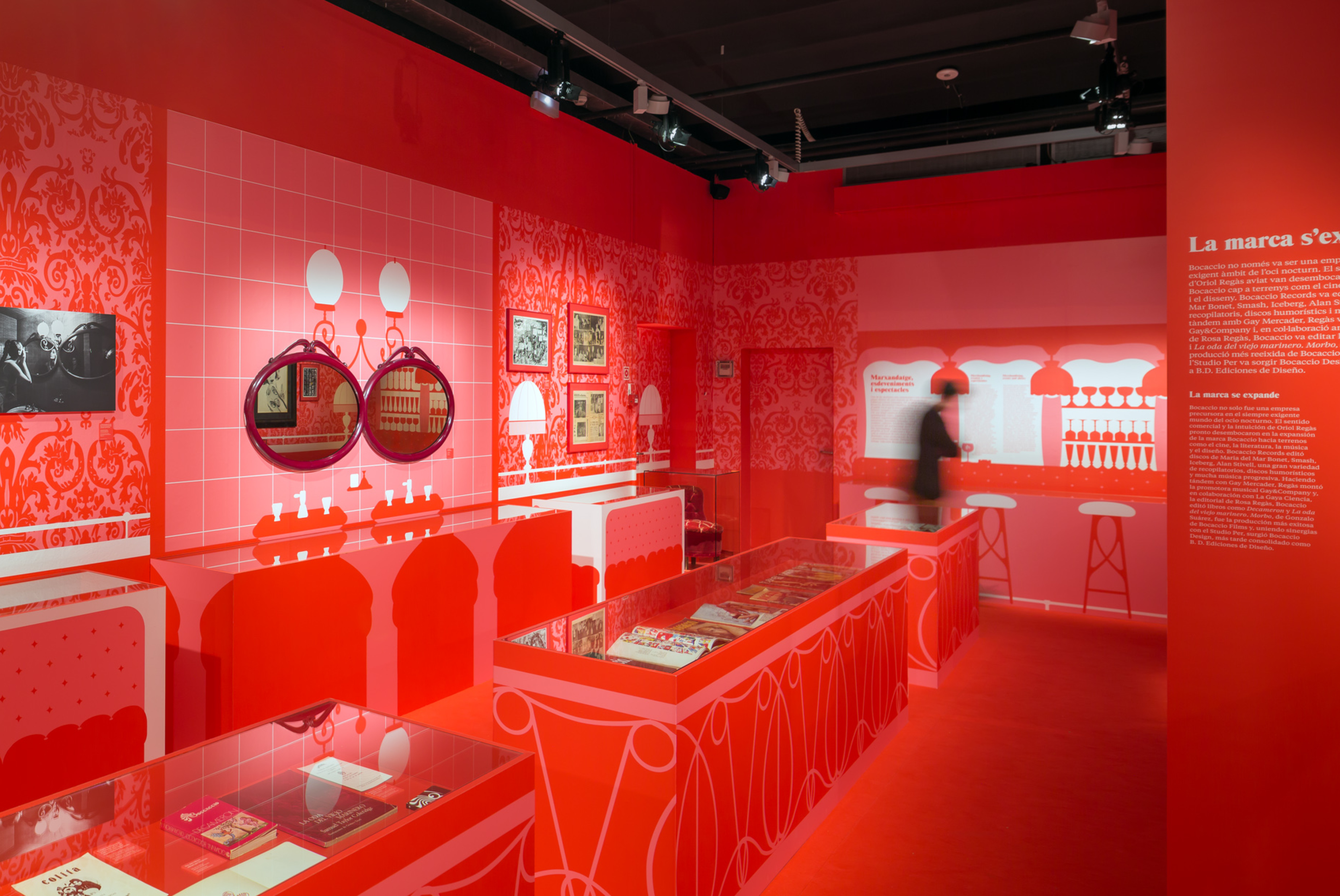 Bocaccio. El temple de la Gauche Divine
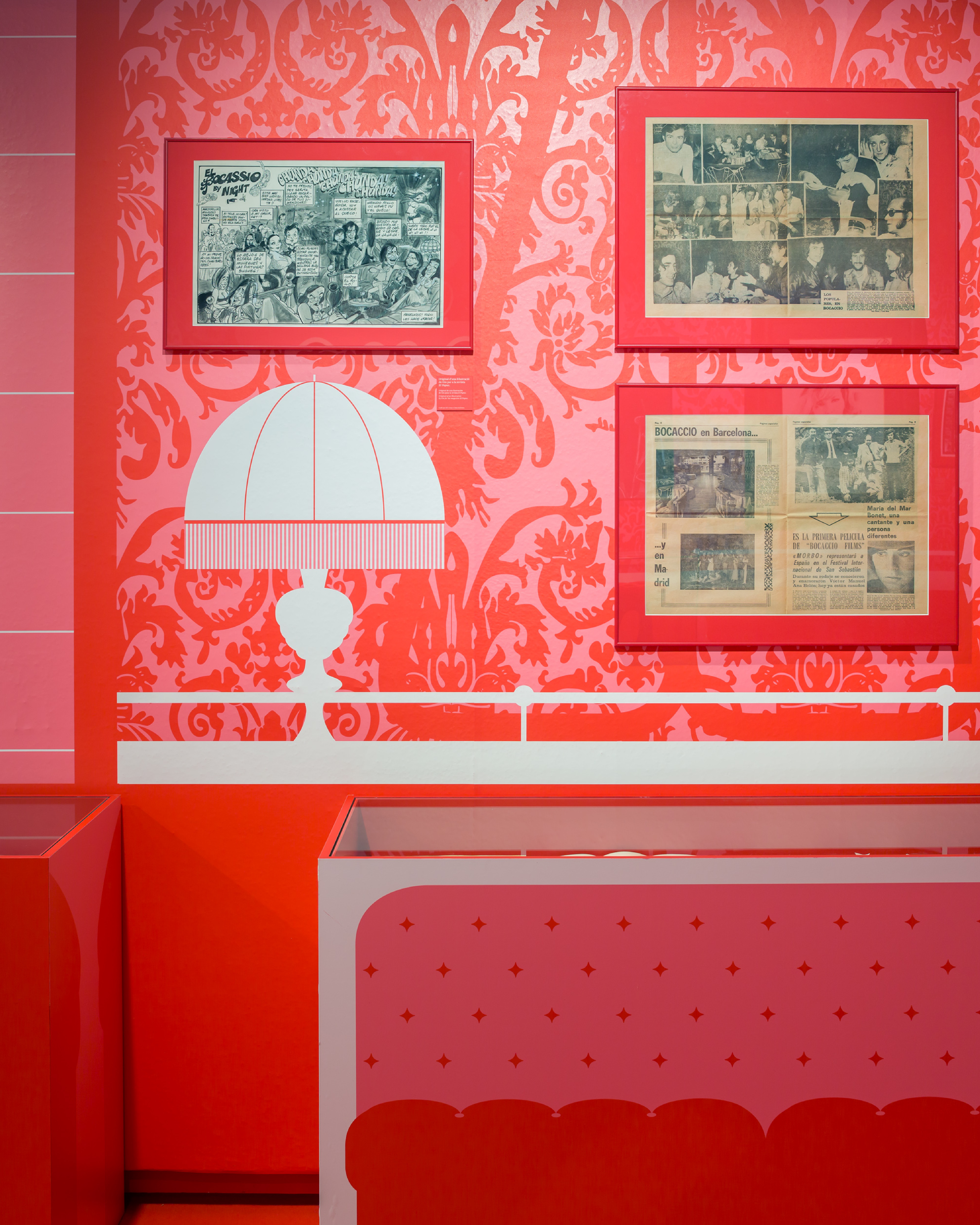 Bocaccio. El temple de la Gauche Divine
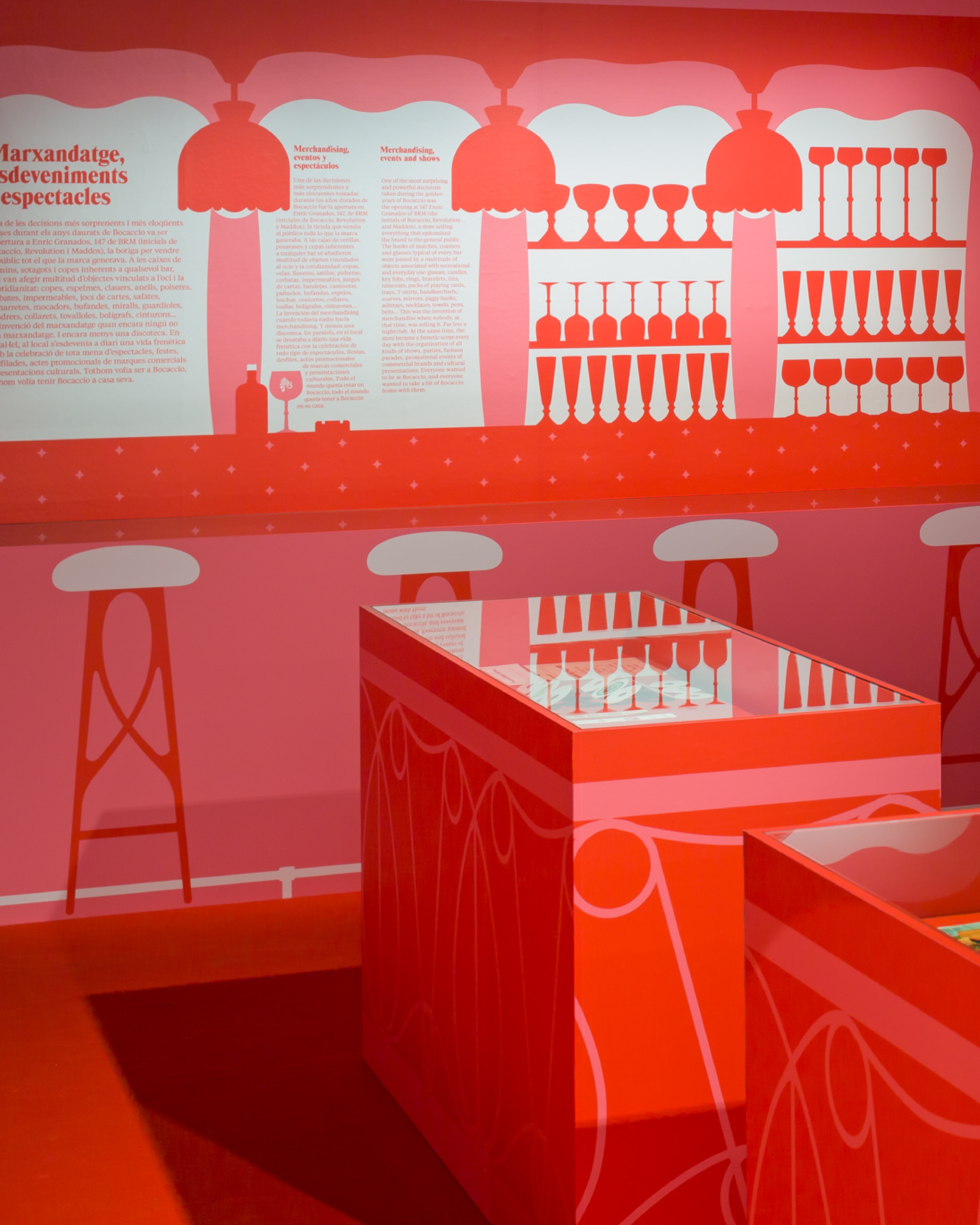 Bocaccio. El temple de la Gauche Divine
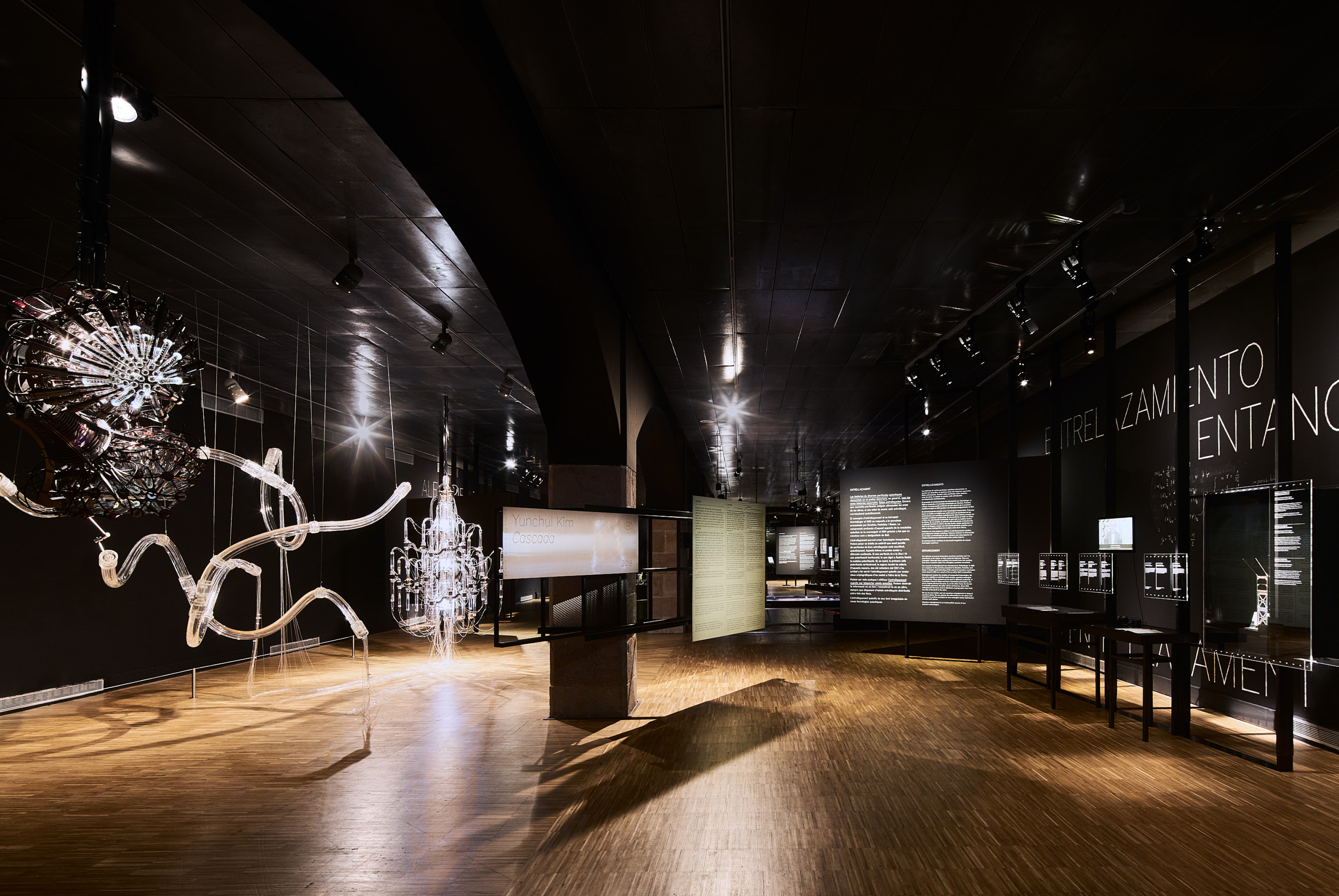 Quàntica, CCCB
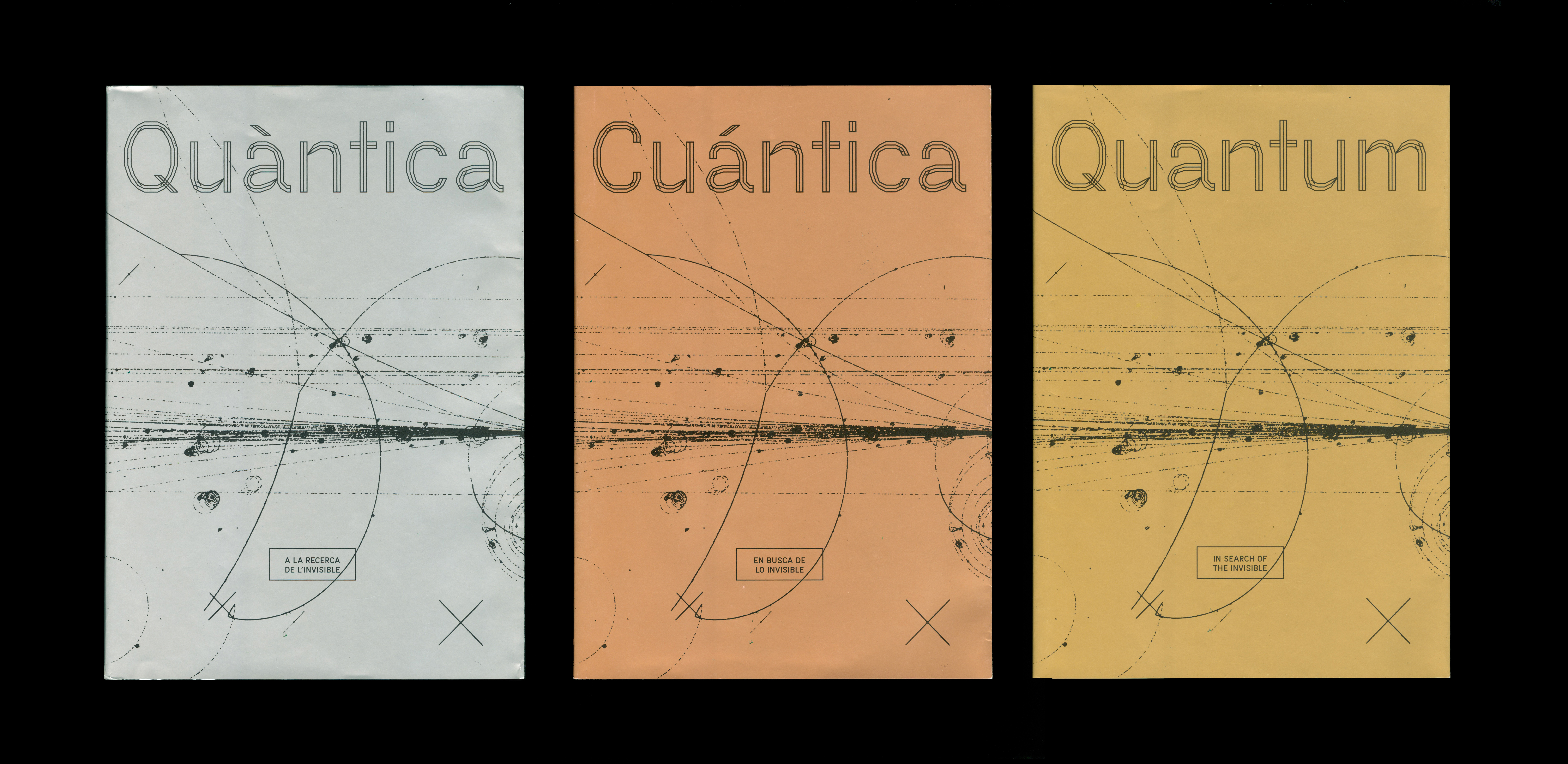 Quàntica, CCCB
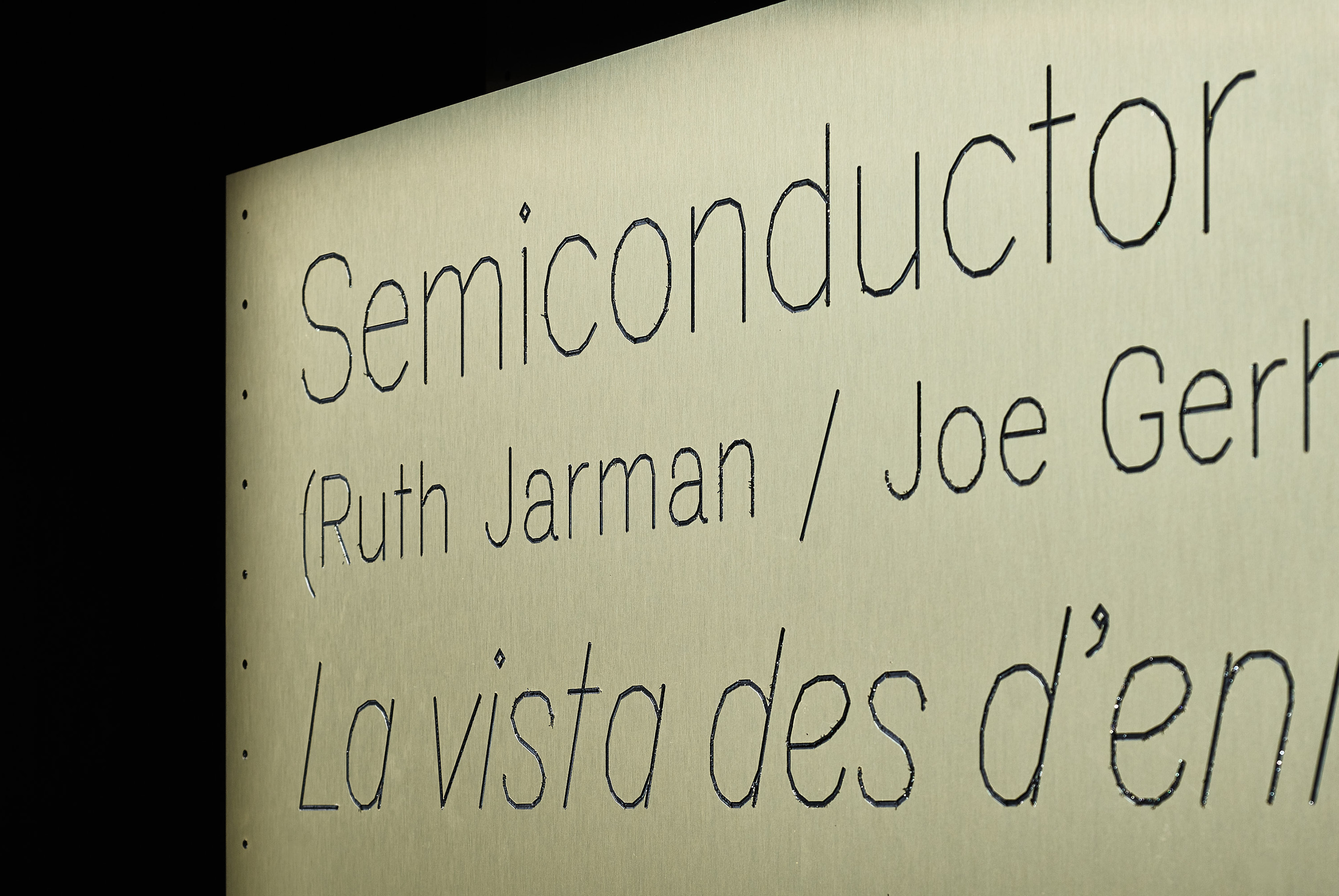 Quàntica, CCCB
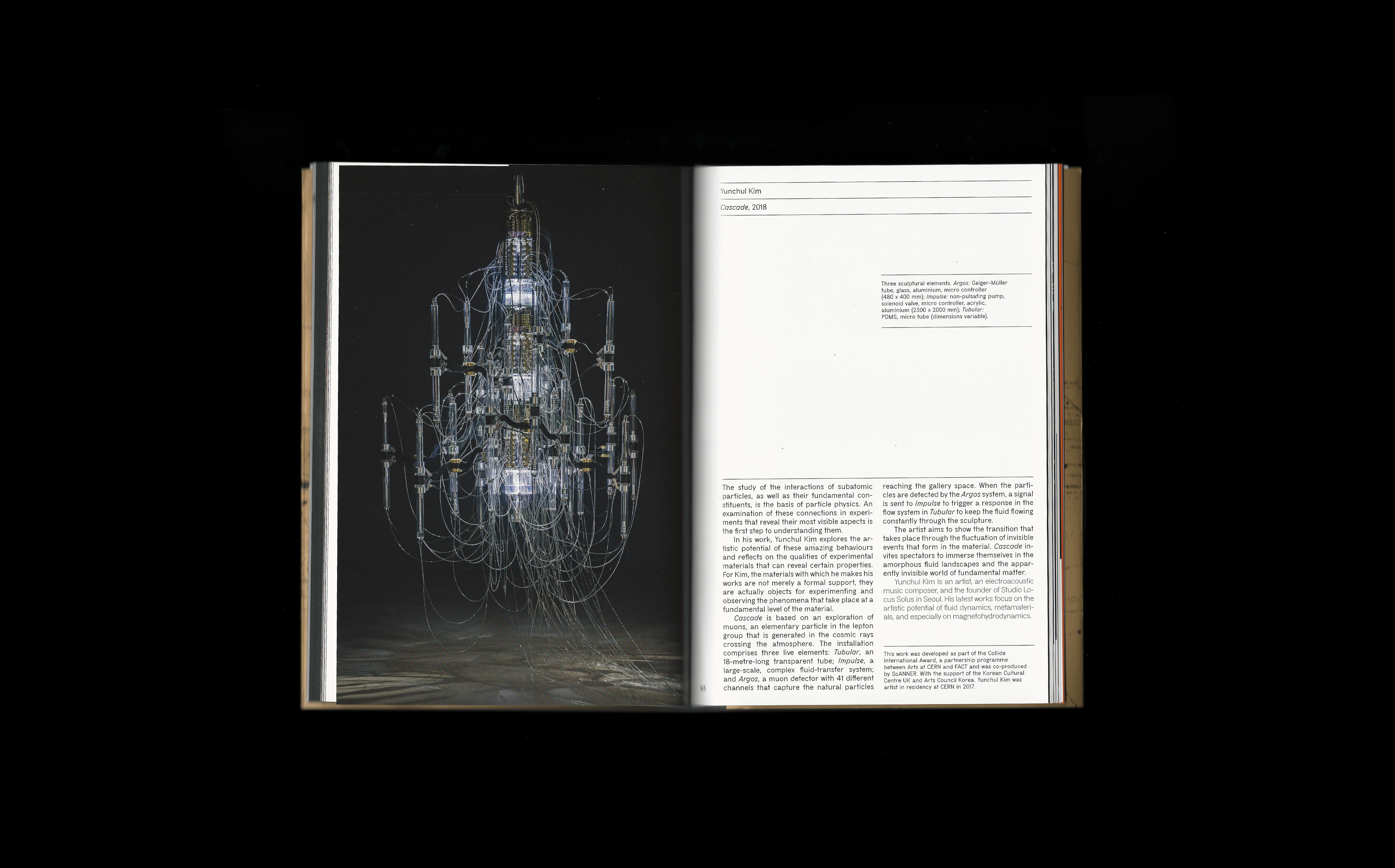 Quàntica, CCCB