






The language of sound faced with the omnipresence of visual culture.
Why should we talk about the language of sound, and not simply sound itself? Listening is not only associated with the reception of sound waves by the ear, but also with the act of understanding. And understanding consists of facing things that are uncomfortable or unusual, yet these are just the things that are deactivated when sound is instrumentalized.
Instrumentalizing is not just choosing certain technologies for producing and spreading sound; it is, above all, the result of a utilitarian attitude that makes us perceive everything as a possible resource to be exploited. I propose, therefore, a sound dis-installation.
The practice of disinstallation such as disinstrumentalization, comes from ecological thinking. Our perception of nature presents a huge contradiction: on the one hand, we mythologize and conserve it and on the other, we exploit it to a radical degree. Faced with this contradiction, authors such as Timothy Morton propose undoing our concept of nature. Rejecting the idea of nature as something distinct from ourselves, which our distance from allows us to visit, exploit, manage and even conserve. If we eliminate the idea of nature, we become part of the same mesh as all other entities. In the case of sound, disinstrumentalization avoids the creation both of a mimicked natural environment and the bubble of soundscaping, such as the use of technology to mediate listening that reinforces distance from nature.
How can we achieve a distance that is neither too far nor too close? According to Gilles Clément, there is a middle ground: a third way, an abandoned parcel, previously exploited. The absence of human impact for a time allows a new diversity of species to flourish, specific to the place they are created. The distance from mankind leaves a wide enough margin to create a form of coexistence. Disinstallation is a sonic third way.
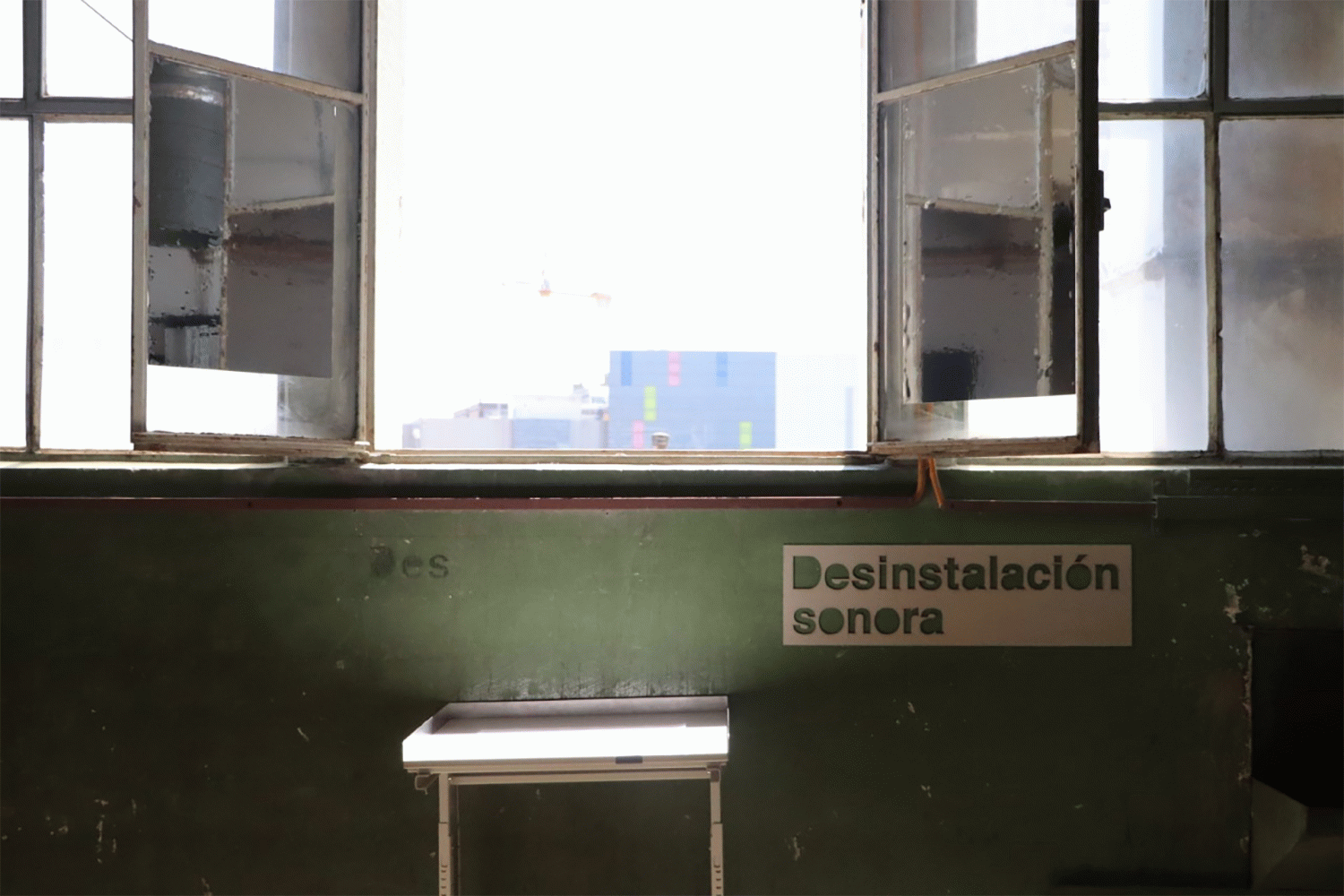 Sound Dis-installation - Ines Lorenceau Raig
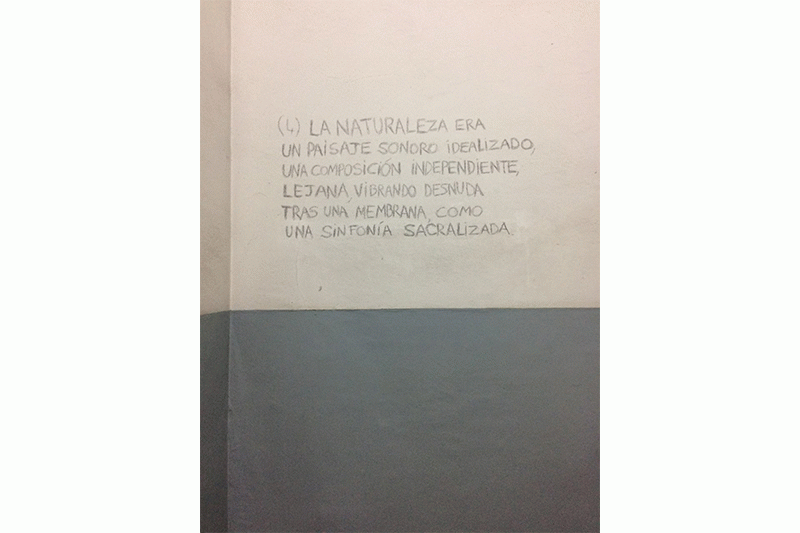 Sound Dis-installation - Ines Lorenceau Raig
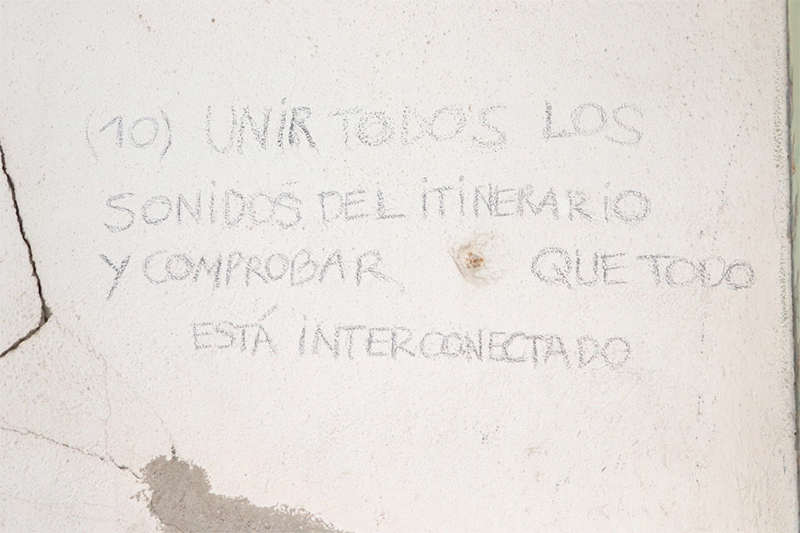 Sound Dis-installation - Ines Lorenceau Raig