





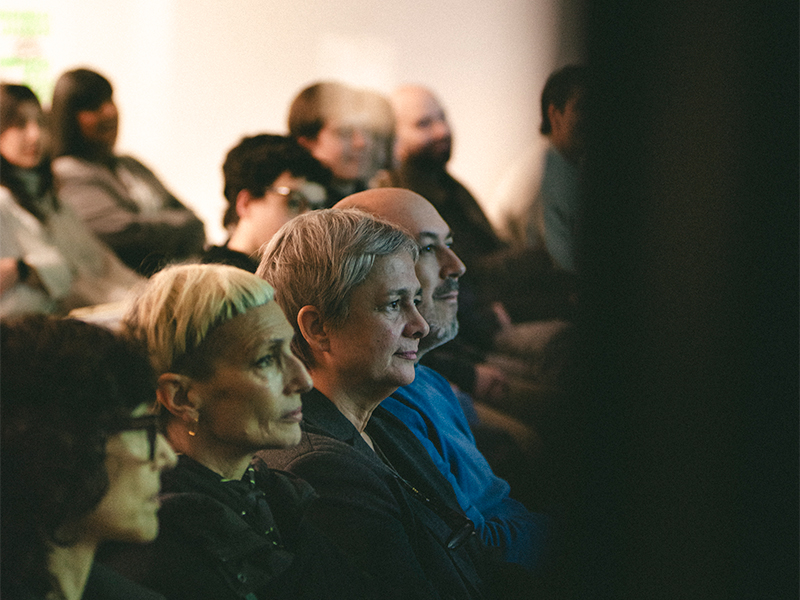
Designer Mario Eskenazi presented Eina’s new visual identity at an event that combined an explanation of the project with a reflection on the craft of design. The event, held on Thursday 12 March, was fully booked and brought together students, professionals and members of the public interested in the field of design at the Bosc facilities.
At the event, Miquel Molins, President of Eina Foundation, highlighted the new visual identity as a central element of the institution’s projection plan, conceived as a dynamic ecosystem articulating its different platforms: Eina University Centre, einaidea and Eina Obra. He also emphasised the long-standing relationship between Eina and Mario Eskenazi, a leading figure in contemporary graphic design and currently an honorary patron of the institution. During the session, moderated by Violeta Sugranyes, Director of Eina Foundation, the Argentine designer advocated a practice grounded in thinking, concept and communication.
“Design is not a job. Design is my life,” Eskenazi stated at the beginning of his talk, in which he advocated a vision of design linked to thought and communication rather than aesthetics. The designer insisted that his method is based on a fundamental premise: “Think first, draw later.”
This same principle also underpins his relationship with younger generations of designers. Over the years, several students trained at Eina have passed through his studio, in a dynamic that he describes as closer to mutual learning than to professional hierarchy. “I have learned something different from each of them,” he noted. Among the designers trained at Eina who have worked in his studio are Nikita Bashmakov, Marc Ferrer, Dani Guix, Francesc Llinares, Dani Rubio and Gemma Villegas.
An identity conceived as a system
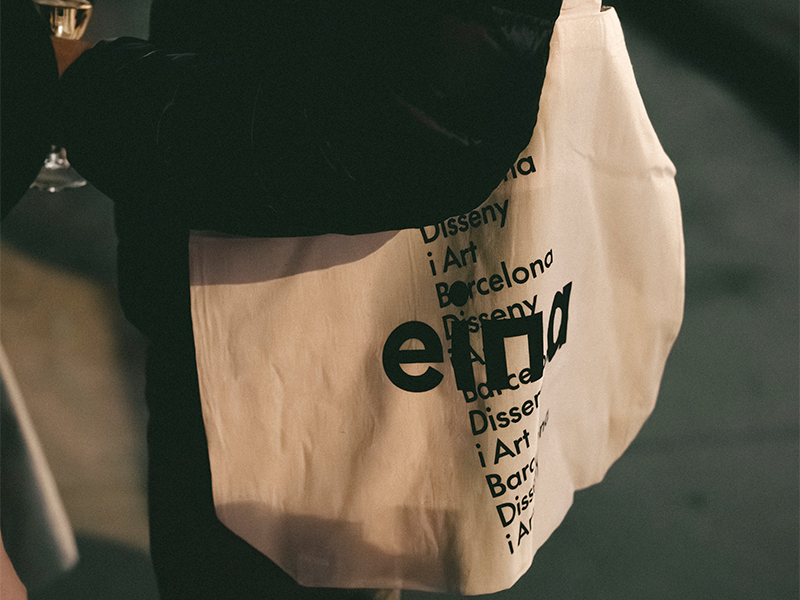
The proposal is built upon the meaning of the institution’s name itself, an idea that structures the concept of the new identity. “The graphic solution is based on the word eina written in lowercase, a choice that reinforces the perception of unity and gives it a close, familiar and complicit character,” Mario explained.
The project is also conceived as a flexible system. The logotype generates different variations depending on the platforms that make up Eina Foundation, allowing it to adapt to the institution’s different academic areas and projects.
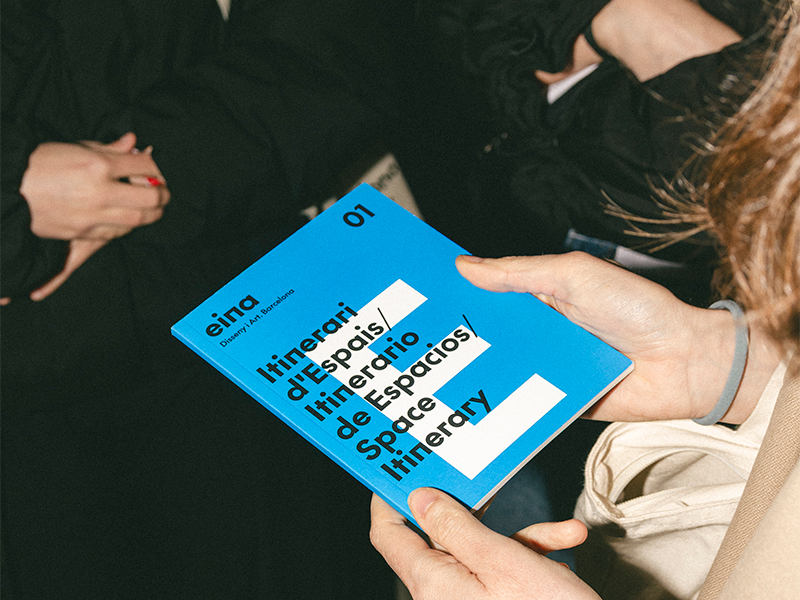
The identity is supported by four basic elements: logotype, typography, colour and variations, which structure the organisation’s entire graphic system.
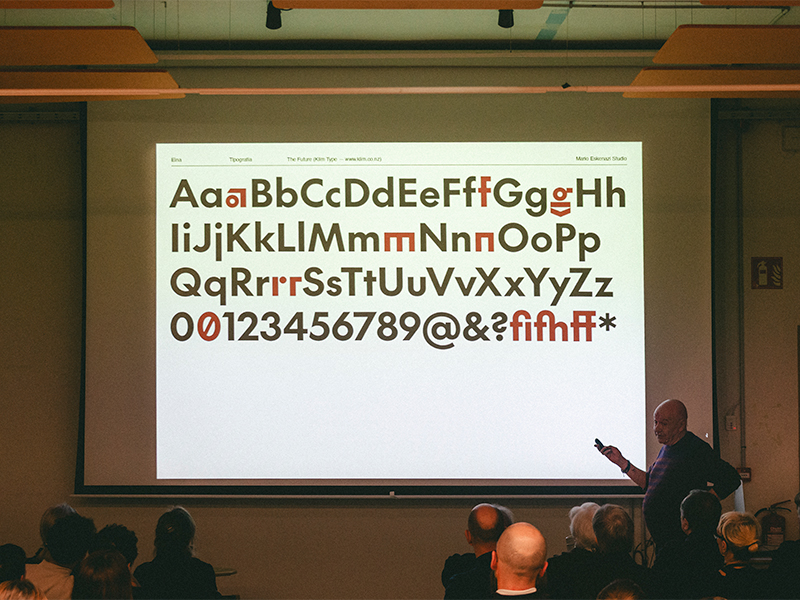
In terms of typography, the designer has chosen The Future, developed by Klim Type, a contemporary reinterpretation of the classic Futura that connects with the modern tradition of European design.
Design as communication
During the presentation, Eskenazi advocated a conception of design based on conceptual clarity. “Concept and form must be a unity,” he explained, stressing that visual form must materialise a clear idea. In this sense, he insisted that design should not be understood as an ornamental exercise: “Design is not decoration; it is communication.”
The designer also emphasised the need for specific solutions for each project. “Every piece of work has to be unique; it has to be ad hoc,” he stated, arguing that the result should respond to the identity of each institution rather than to passing trends.
In this respect, he argued for avoiding visual fashions: “I try to make timeless design. At the same time, it has to be contemporary, because we communicate today for people today.”
Thinking before producing
Throughout the session, Eskenazi also shared some of the ideas that have shaped his professional trajectory. Among them were the importance of reflection prior to designing and the direct relationship with those who commission projects.
“I do not work with clients; I work with people,” he said. According to Eskenazi, this long-term relationship allows coherent identities to be built over time. The designer also stressed the importance of achieving natural and recognisable results: “An identity must generate a system. Ideally, it should be recognisable even without seeing the symbol.”
Founded in Barcelona in 1967 by artists and intellectuals, Eina was created with the aim of renewing the teaching of design and art in Spain and has since become one of the leading centres in this field. The new visual identity designed by Mario Eskenazi engages with this legacy and with the avant-garde movements of the twentieth century (from the Bauhaus to geometric abstraction), projecting the institution’s image into the present through a contemporary graphic system.
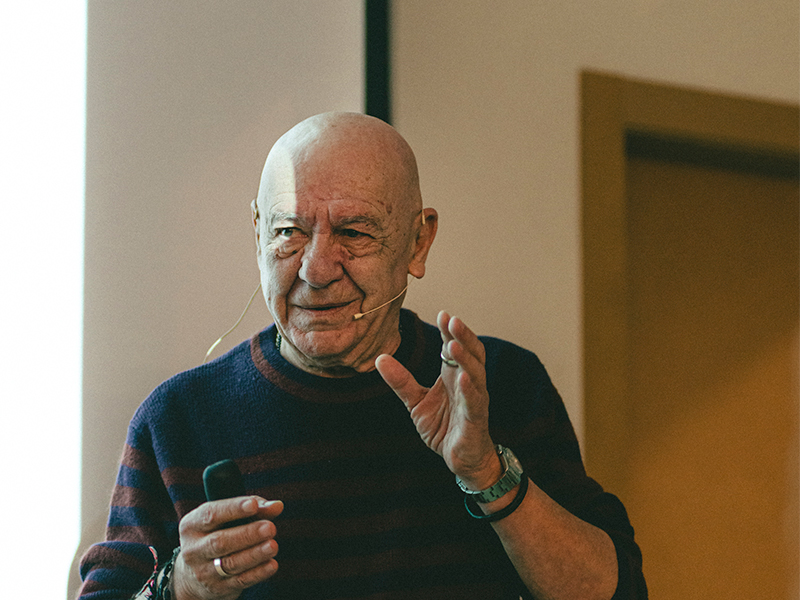 Mario Eskenazi presents Eina’s new visual identity
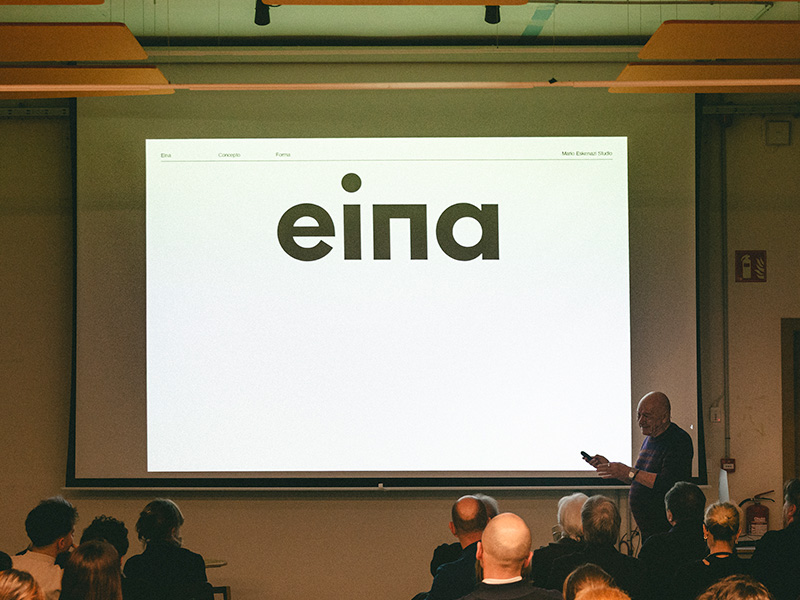 Mario Eskenazi presents Eina’s new visual identity
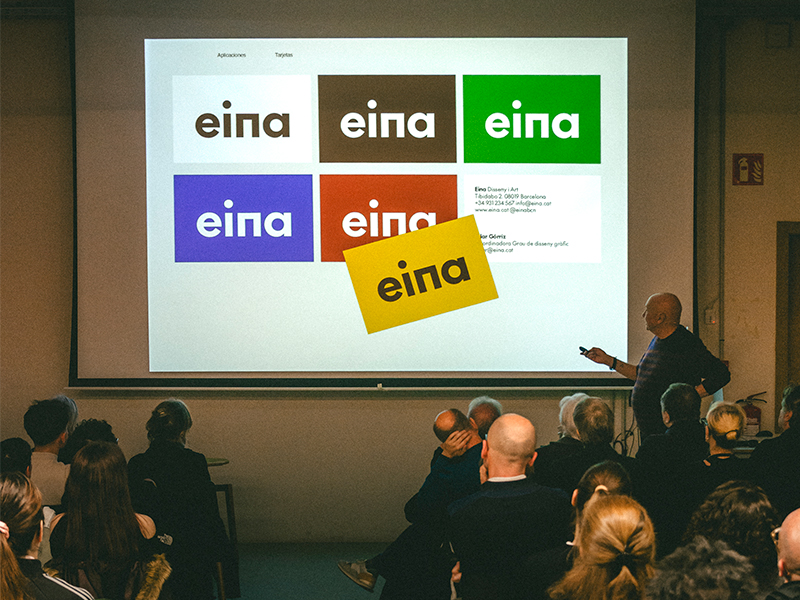 Mario Eskenazi presents Eina’s new visual identity
 Mario Eskenazi presents Eina’s new visual identity
 Mario Eskenazi presents Eina’s new visual identity
 Mario Eskenazi presents Eina’s new visual identity
 Mario Eskenazi presents Eina’s new visual identity