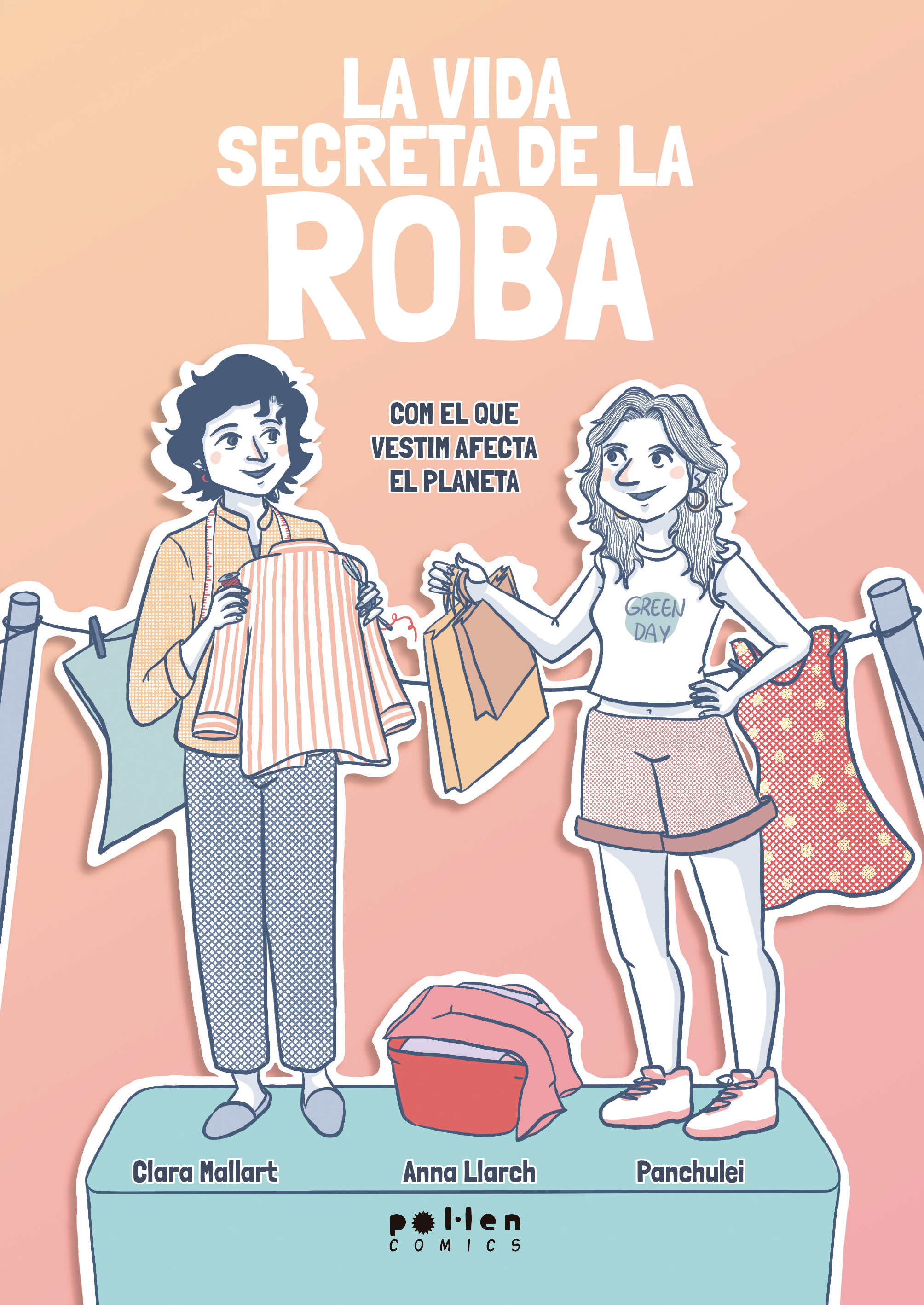


The clothes we wear reveal little about the journey they have taken before reaching our wardrobes: where they come from, who made them, what resources were used to produce them, or what impact they have on the planet. This is the central idea behind La vida secreta de la roba (The Secret Life of Clothes), the graphic essay written by Clara Mallart, lecturer on the Bachelor in Design and the University Master’s Degree in Art and Design Research (MURAD), and Anna Llarch, with illustrations by Panchulei, an alumnus of the Diploma in Creative Illustration.
The work invites the reader to look beyond the label and become aware of everything that often remains hidden behind the textile industry. Through a combination of popular science, narrative and humour, the book offers a critical reflection on consumption habits and the social and environmental consequences of fast fashion.
La vida secreta de la roba combines educational content, graphic storytelling and environmental awareness to challenge the model of accelerated production and consumption imposed by fast fashion. Through the protagonists, Rita and Nico, the book takes the reader on a journey that reveals the industrial processes required to manufacture clothing, which are often linked to significant environmental and social impacts.
The protagonists’ journey also becomes a process of personal transformation and of discovering those aspects that are usually overlooked in everyday life. It is precisely through these everyday situations that the story unfolds and the protagonists become aware of the reality hidden behind the textile industry. Thus, the information not only serves an informative purpose, but also acts as a catalyst for personal change and critical reflection.
Mallart advocates a critical yet educational perspective on clothing consumption. “Fast fashion is a reflection of today’s society: fast-paced, hectic, rapid, globalised and, above all, extractive,” she explains. According to the author, the textile production and consumption model responds to macroeconomic and political dynamics that have divided the world into “a global consumer North and a global producer South, where the most serious environmental and social impacts occur, often rendered invisible”.
The book avoids a tone of blame and instead seeks to raise questions: what do we know about the clothes we wear? What local alternatives exist that support different approaches to fashion? Published by Pol·len Edicions, the book is part of a series of critical popular science works that aim to bring social and environmental debates to new audiences. The comic book format makes for a quick and accessible read, particularly for young readers, without compromising the rigour of the research behind it.
With La vida secreta de la roba, Mallart brings an increasingly pressing concern into the realm of narrative: the need to rethink our relationship with the clothes we wear. An invitation to look at our wardrobes with fresh eyes.
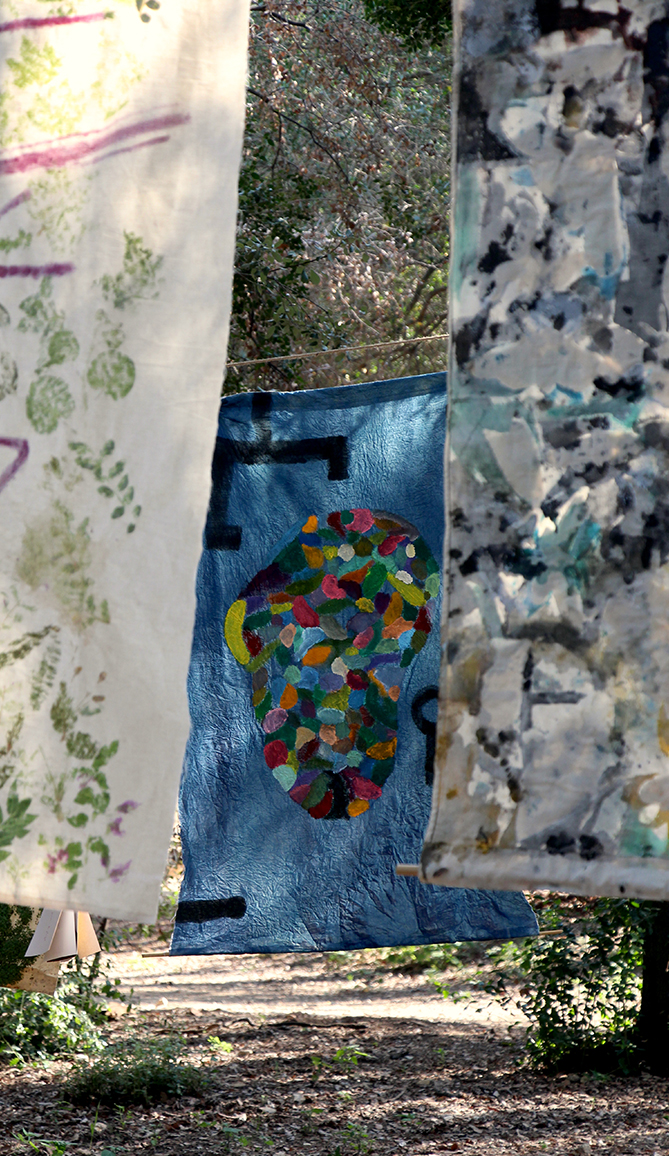
Cover image: Lifelong fashion: a strategic proposal for a circular and sustainable clothing system, Final Project for the University Master’s Degree in Art and Design Research by Clara Mallart.