



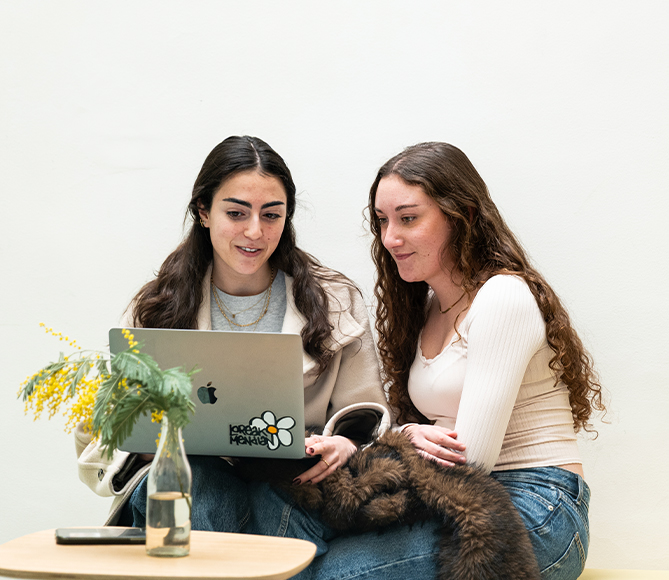

Rafael de Balanzó, urban designer and professor on the Master’s in Social Practice at the City University of New York, has given a workshop on Resilience Thinking Design as part of the EINA University Master's Degree in Research in Art and Design. The aim of the workshop was to introduce students to resilient thinking and provide them with the tools to learn to face existing and future challenges in a current environment of great complexity.
Resilient thinking comes from the science of complexity and sustainability (1). It allows us to analyse, understand and act in the face of systemic changes, such as climate change, social justice and economic crises, enabling the study of the dynamics of complex systems networks, such as a territory, a discipline, an institution, a community, a natural space or even our planet Earth. The metaphor of resilience is based on the adaptive cycle (2) which enables us to overcome linear and fragmentary thinking (problem --> solution) towards complex and holistic thinking. It takes into account the concepts of multidisciplinarity and multiple governance through the introduction of different levels of complexity in analysis and prospection, influenced by processes of revolt and stabilisation – so-called panarchy (3) – with the same etymology as the word pandemic (“it affects us all”).
In the workshop, the participants chose hashtags to disseminate the projects, such as #resilientthinkingdesign (Fayna Nieves Ramos), #adaptivecycle (Carmen Montiel Cervantes) and #infiniteresilience (María Antonia Gaviria Hernández).
The initial questions to start off the workshop, amid the world lockdown crisis of Covid-19 in April 2020, for the prospection of ideas and emerging actions were the following:
- What are the causes of the process of creative destruction due to the Covid-19 crisis and how does it affect the discipline of design?
- What is the nature of this process of creative destruction?
- What are the future processes of reorganisation based on the metaphor of resilient design to learn to be ready for future systemic crises?
- 1 - Holling, C. S., & Gunderson, L. H. (2002). Panarchy: understanding transformations in human and natural systems. Washington, DC: Island Press.
- 2 - Balanzó, R. & Rodriguez-Planas, N. (2018) Crisis and Reorganization in Urban Dynamics: The Barcelona Case Study, Ecology & Society Journal 23(4):6.
- 3 - Balanzo, R., Magrinya, F. (2015) A critic perspective of Social and urban innovation and resilience: Self-reliant urban space in Barcelona, pº 59-94, Social innovation and urban policies in Spain, Icaria Editorial, Barcelona, Spain.
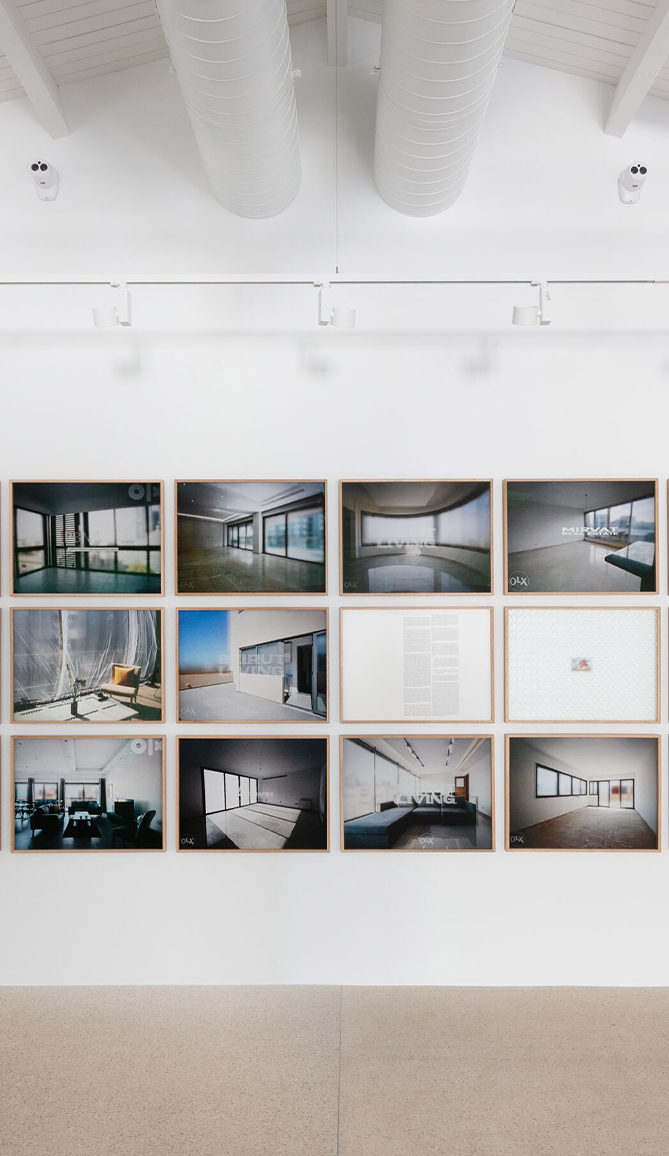
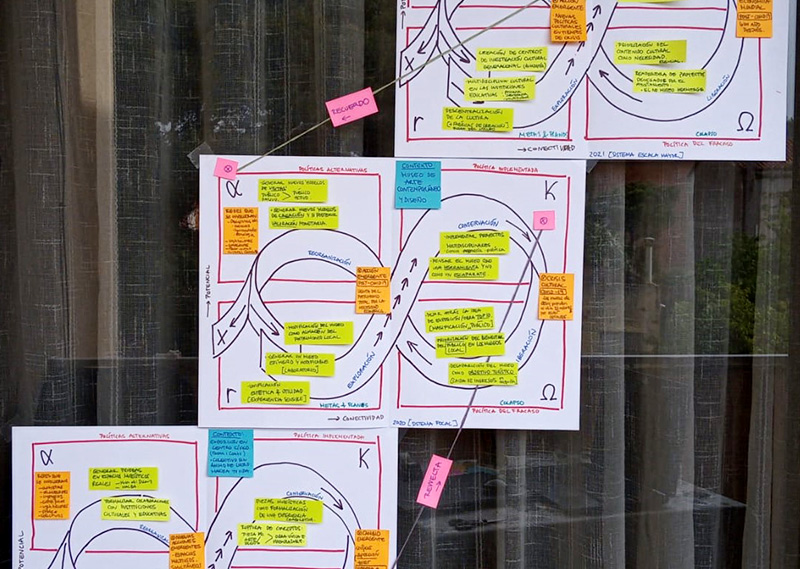 “Resilience Thinking Design” workshop, photo Fayna Nieves
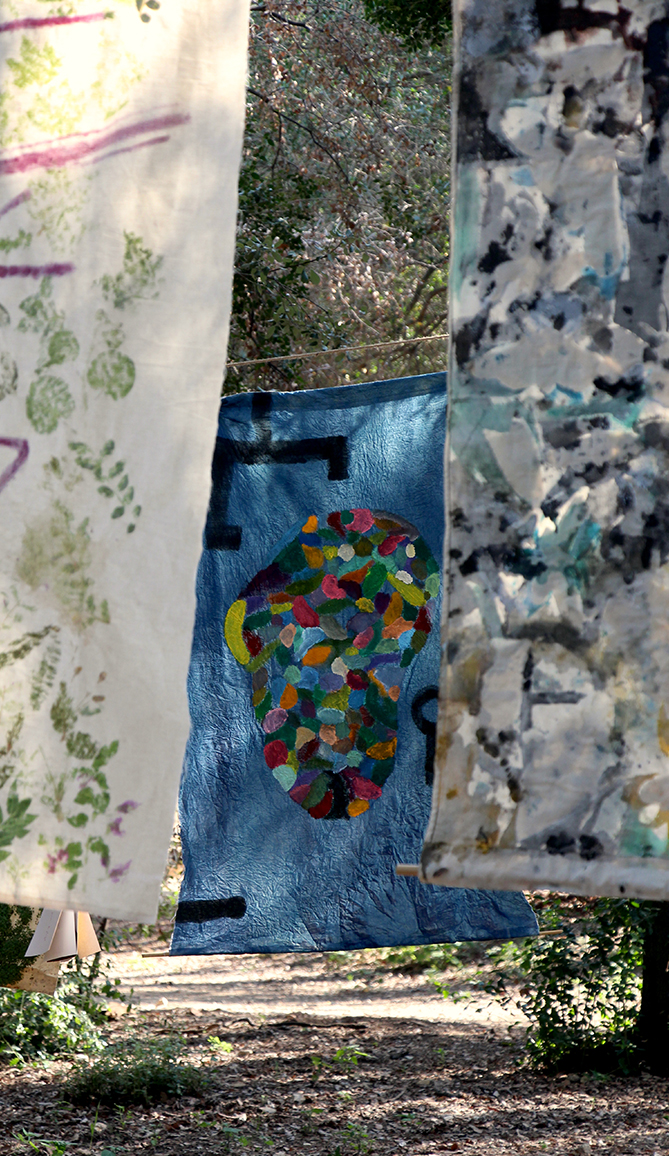
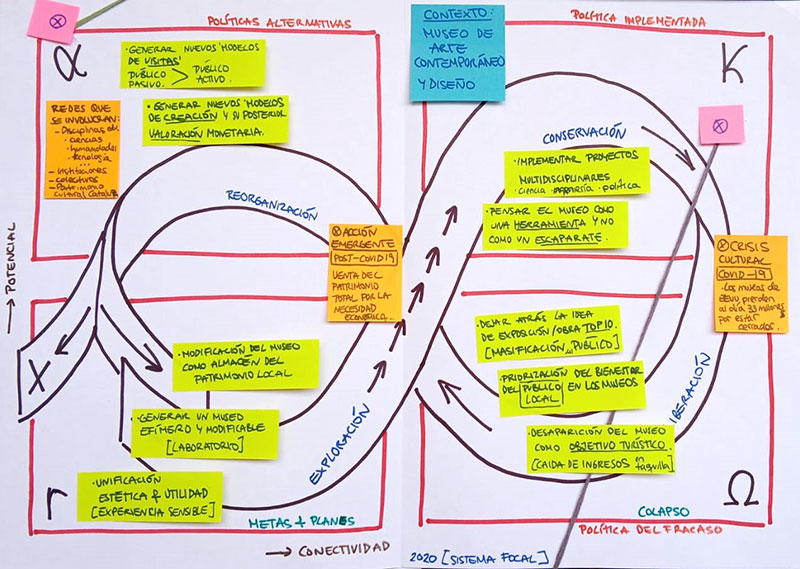 “Resilience Thinking Design” workshop, photo Fayna Nieves
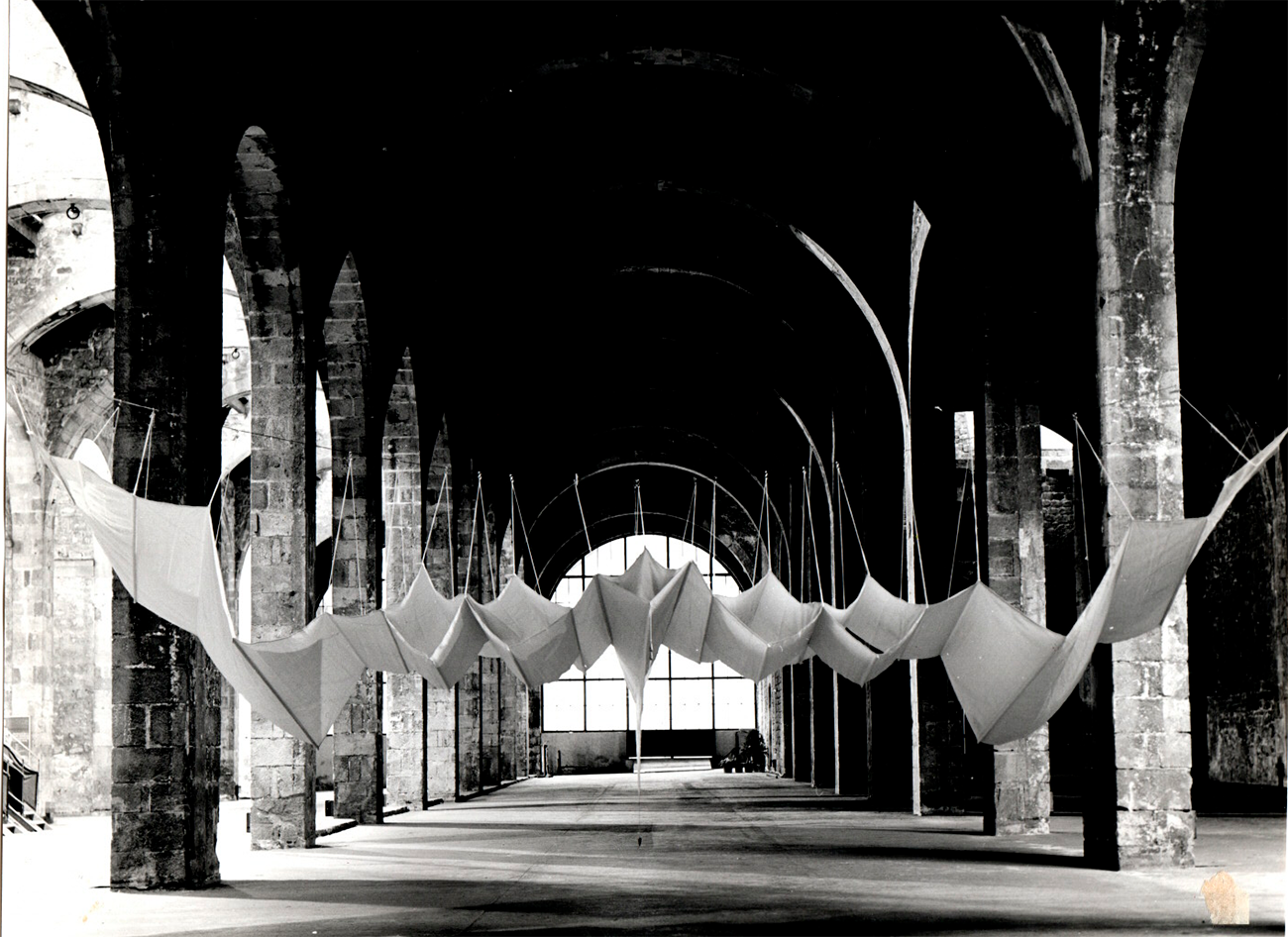
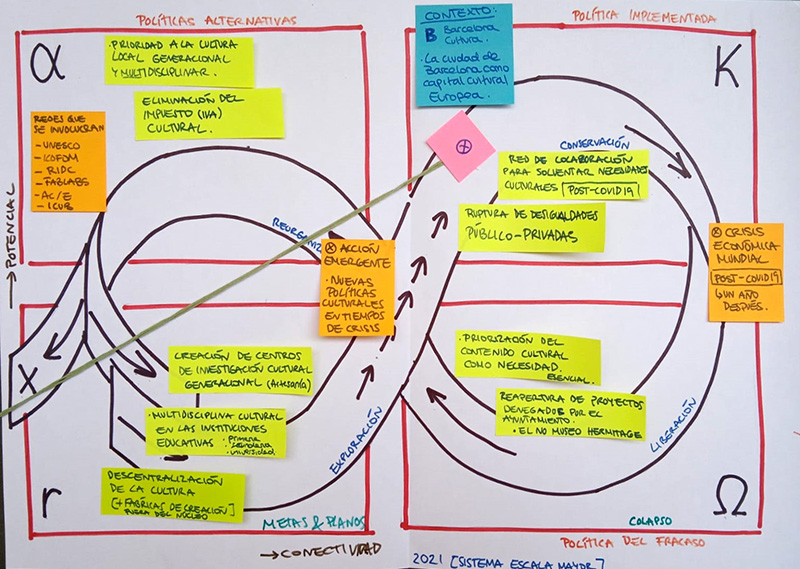 “Resilience Thinking Design” workshop, photo Fayna Nieves
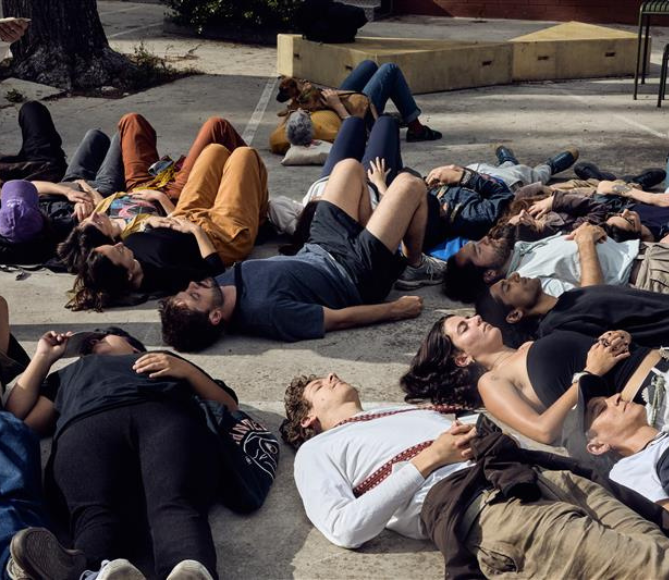
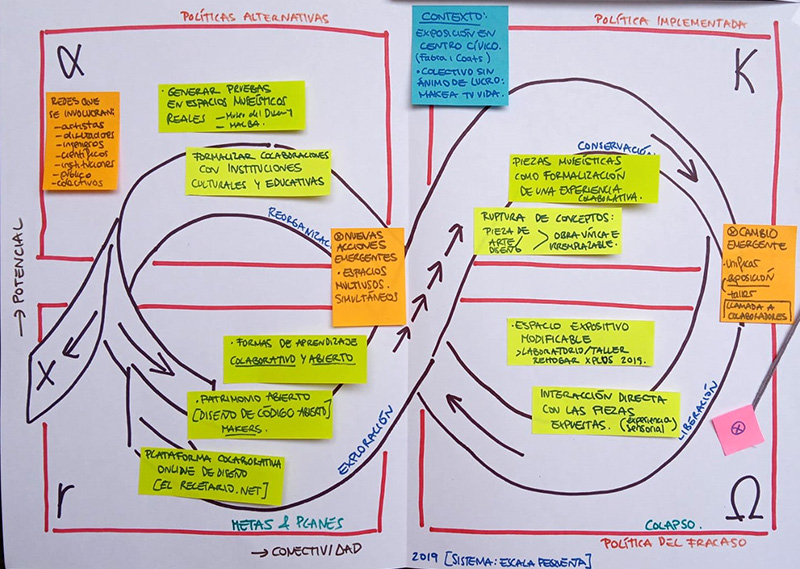 “Resilience Thinking Design” workshop, photo Fayna Nieves
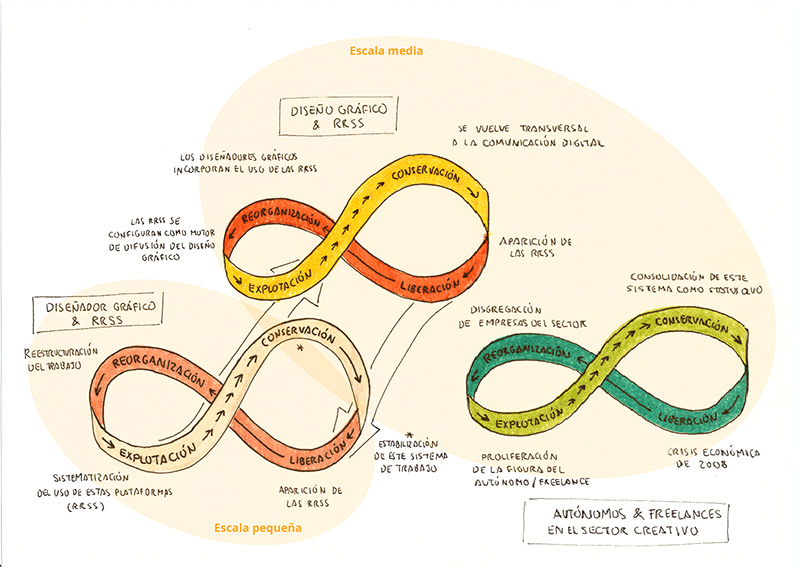 “Resilience Thinking Design” workshop, photo Carmen Montiel
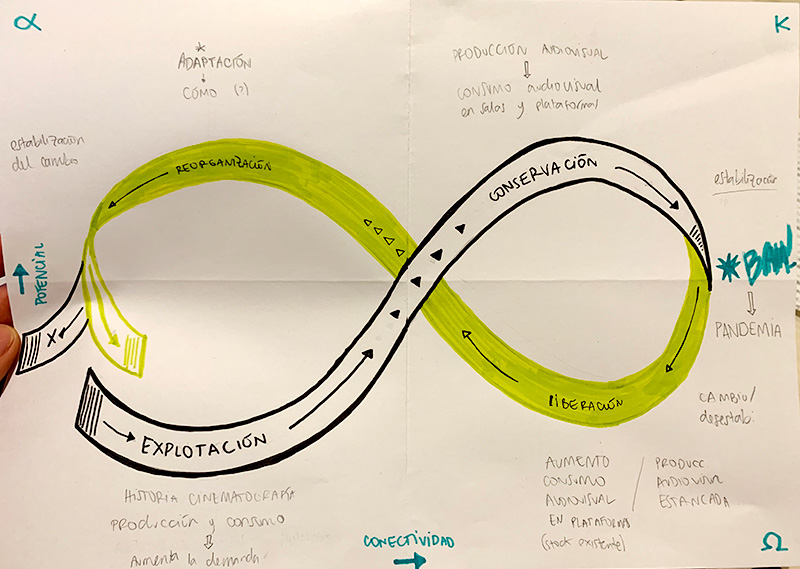 “Resilience Thinking Design” workshop, photo Maghmaria Antonia