





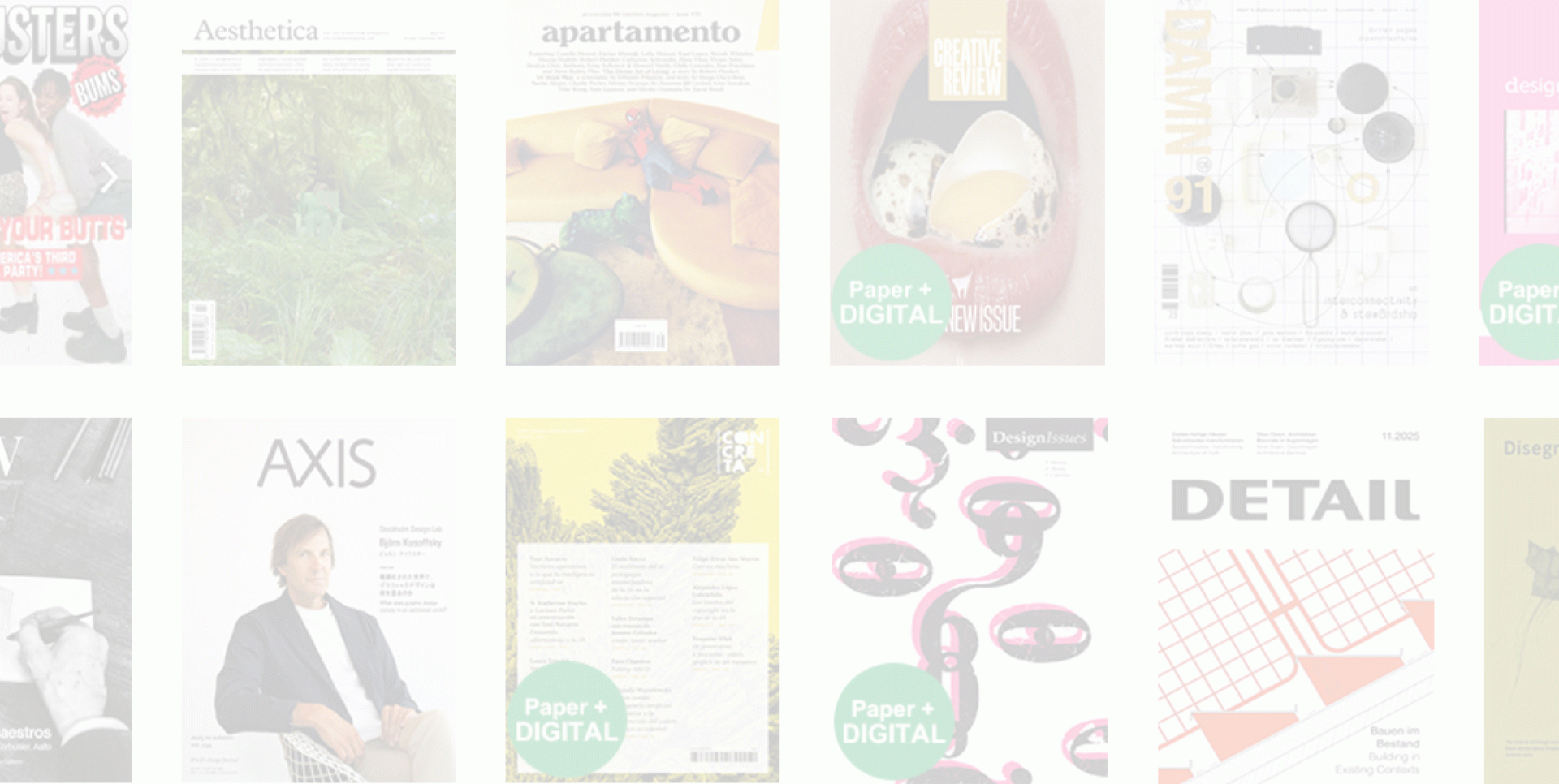
The Bibliotaulell, the virtual desktop of the Eina Library, returns after a period of inactivity with an updated design that is far more modern, flexible and easy to navigate. It is an online space for learning, deepening knowledge and sharing content and informational resources related to design and art.
The homepage features a blog with curiosities from the world of design entitled “Did you know…?”, where new events or interesting facts from the sector are discussed approximately once a month. There is also the “biblionotes” section, consisting of short curiosities related to design and art, as well as directly connected to the Eina Library or the library field.
The “Journals” section displays the most recent journal issues received by the Library, a collection that is constantly updated, just as it is in its physical format. As a new feature, and unlike the previous Bibliotaulell, journals with expired subscriptions have also been incorporated, as they form part of the hemerographic collection. All these journals are classified according to subject area, improving ease of use and navigation.
Likewise, the main body of the Bibliotaulell is made up of free international online resources, selected by the library staff for their high informational value. It is divided into three major blocks, each with its own subsections:
- Cultural tools, which include professional colleges and associations, as well as a collection of portals, blogs and websites dedicated to design and art, together with a selection of digital journals.
- Research tools, providing access to open-access resources (especially e-books); image banks (websites for downloading icons, images, etc.); museums and institutions (online consultation of museum collections); products, materials and companies (search tools for products, materials and companies, particularly aimed at interior and product designers); and theses (repositories for consulting theses and other research works).
- Reference tools, which include online resources divided into the following sections: tools and support (applications for modelling or typeface libraries); encyclopaedias, dictionaries and translators; manuals and tutorials (online manuals for the software used at the institution); and regulations and legislation (resources related to design regulations and laws).
Finally, two additional sections are included: a selection of current awards, grants and competitions, aimed at both students and professionals in the sector, and a “Help” section with documentation on bibliographic citation in both ISO and APA formats; access to other bibliographic catalogues and journal repositories; the databases subscribed to by the Library; and, lastly, a research section for the Teaching Staff.
From the Eina Library, we encourage you to visit the new website and hope you find it extremely useful.