







Hoy, 9 de junio, se celebra en todo el mundo el Día Internacional de los Archivos, coincidiendo con la fecha de creación del Consejo Internacional de Archivos (ICA/CIA) en 1948, bajo los auspicios de la UNESCO.
Con esta entrada, queremos hacer desde EINA, nuestra pequeña contribución a un mejor conocimiento de lo que es un archivo, y de la importancia de estos como herramientas esenciales para garantizar la gestión eficaz, responsable y transparente a las instituciones, así como para asegurar la memoria individual y colectiva, comprender el pasado, documentar el presente y preparar el futuro tal y como pone de manifiesto la [Declaración Universal sobre los Archivos](http://www.ica.org/sites/default /files/UDA_2012_press_CAT.pdf) del ICA/CIA...
Today, June 9th is the International Archive Day, coinciding with the date of creation of the International Archive Council (ICA/CIA) in 1948, under UNESCO’s auspice.
With this post we want to take the opportunity to make our own contribution to knowledge by answering some questions on what’s an archive and specifically what’s in EINA’s archive. Archives are essential tools to guarantee efficient, responsible and transparant management of institutions, as well as to guarantee the individual and collective memory that helps us understand the past, document the present and prepare the future, as it is portrayed in the manifesto of Universal Declaration on Archives del ICA/CIA.
What’s an archive?
It is the organic set of documents, or meeting of several of these sets, gathered by public or private legal entities in the exercise of their activities in service of their use for research, culture, information and administrative management.
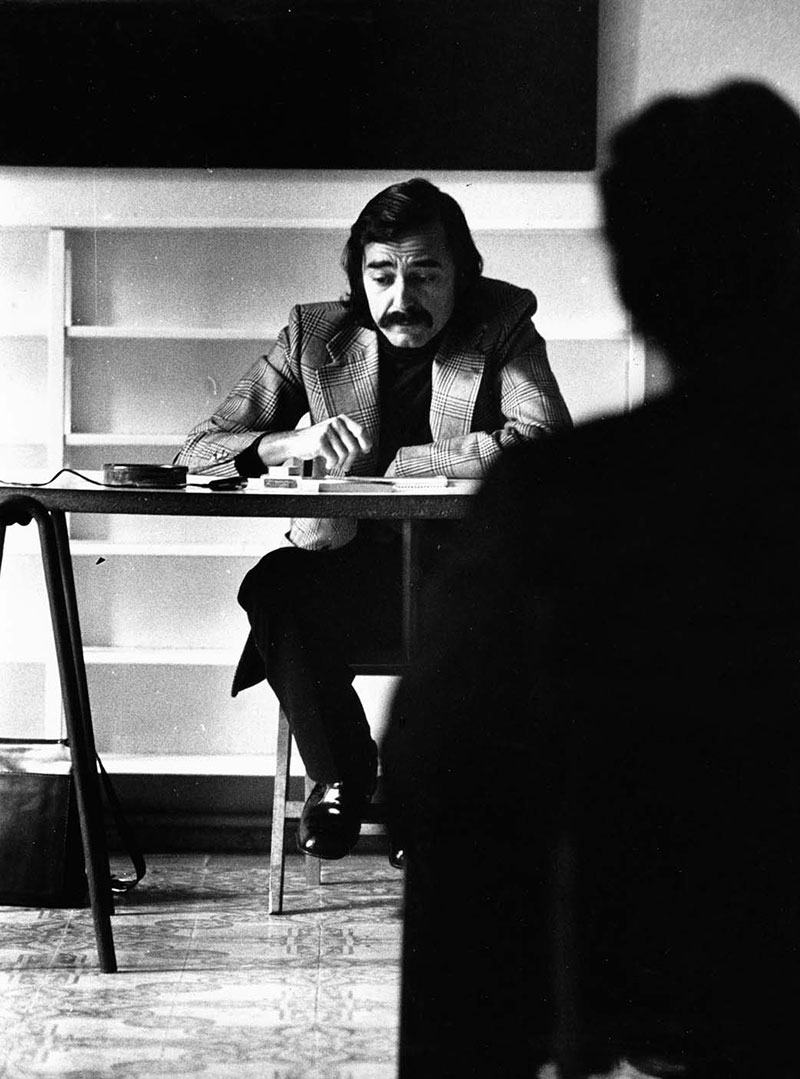
Eugenio Trias dictating the conference Current philosophy as tragic philosophy (October 1972)
What’s in archives?
Documents of any period who have their own characteristics (archival documents) and that have been produced by individuals and organizations of all kinds in the exercise of their activities.
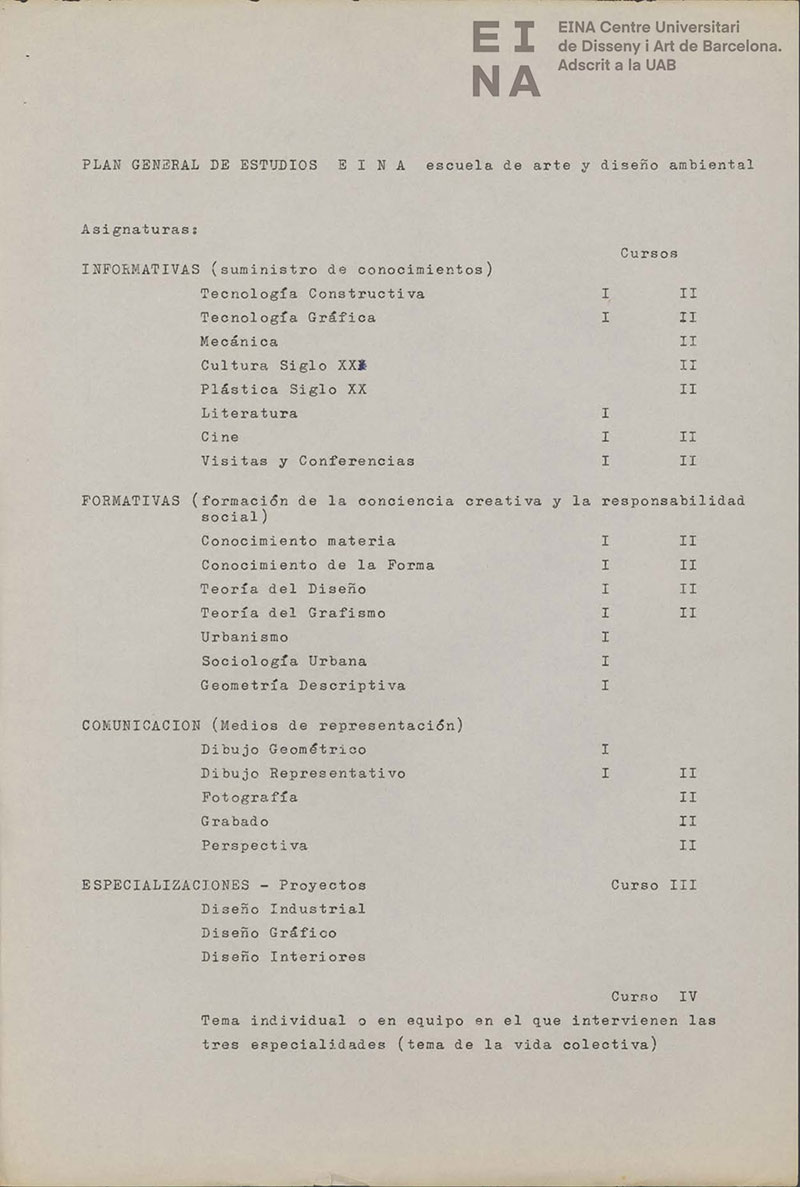
General Study Program of EINA School of Art and Environmental Design (1968)
Who creates/builds an archive?
Any individual or legal public or private entity -individuals, families, institutions and organizations of all kinds (family, business, church, association, school, Public admin.) - in the exercise of their activities.
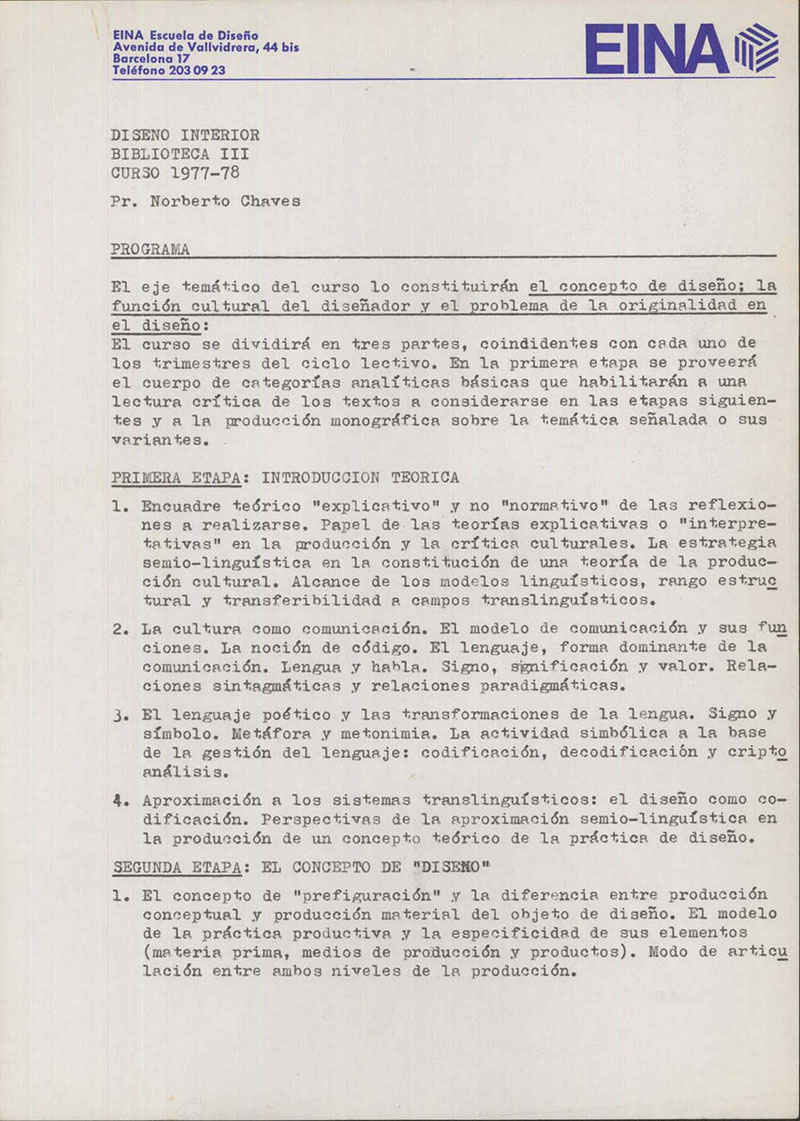
Part of the Librarianship III subject’s syllabus by Norberto Chaves (1977)
How are documents in an archive to be preserved?
- Respecting the order in which they were produced.
- Organizing them and describing them so favoring quick and efficient recovery of the information contained therein.
- Ensuring the sustainability of the documents that are intended for permanent preservation.
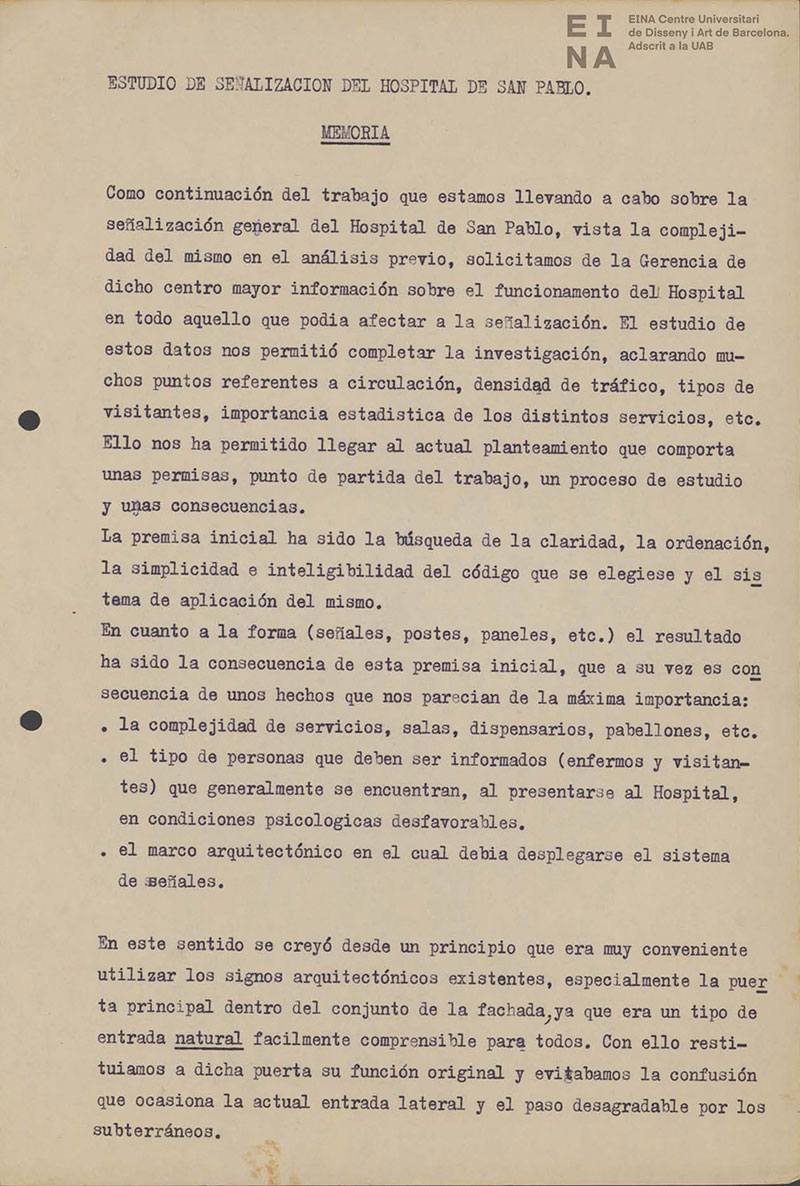
Part of the Signaling study of the San Pablo Hospital: Catalogue (1973)
What are archives and their documentation important?
They are a tool that guarantees proper governance of both individuals and organizations to provide immediate memory, that allows to verify the facts, analyze them and compare them to achieve effective management, and to allow access to authentic information and provide evidence of the decisions taken, evidence of rights and duties.
They are a tool for democracy that guarantees administrative transparency (one of the essential mechanisms of democracy) guaranteeing citizens access to information. ¬ They are a tool that helps to shape collective memory and cultural heritage. As witnesses of human activity, become the basis for research (sources of history), for configuration of personal identity and collective identity and for the configuration of cultural heritage.
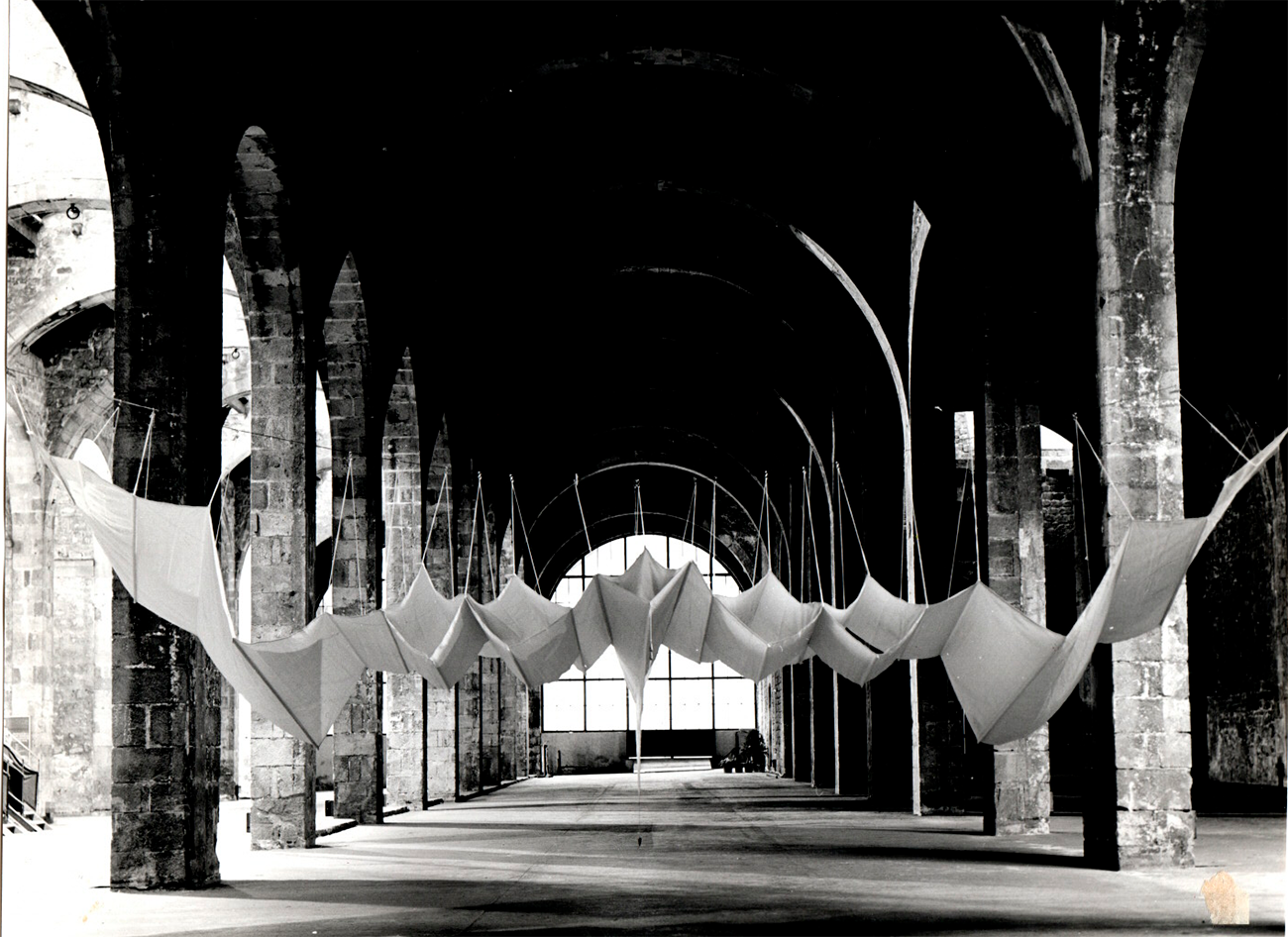
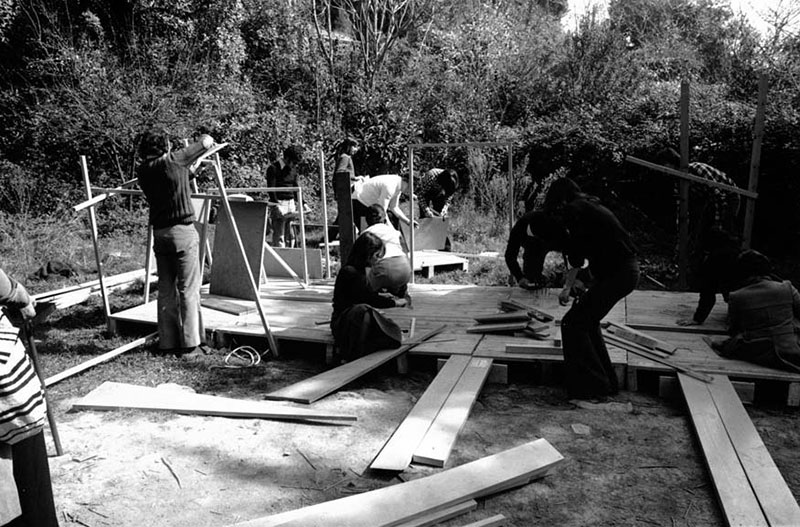 Student of EINA in the activity Sausalito: construction without words directed by Fernando Amat during the year 1972-1973.
Photography: Albert Font.
 Sausalito